
Somewhere inside a carmaker's data warehouse, a line on a chart ticks upward. Warranty claims for one brake component are running slightly above the forecast, not dramatically, just enough to trip a threshold. A week later the same part shows up in a cluster of field reports from three different states. That faint signal is where a recall of millions of units actually begins, long before the public hears a word about it.
Most people picture a recall as a letter in the mail or a news alert, but that is only the visible end of it. Underneath sits a data pipeline whose real job is to detect a defect early, trace it to the exact units affected, and then find and fix every one of them. It is one of the largest logistics and information problems in modern manufacturing, and the hardest part is almost never the physical fix. It is knowing which products are defective, where they are, and who owns them.
How a Defect Gets Noticed
Detection is the first and most underrated stage. A defect that ships in volume rarely announces itself. It hides inside normal failure rates, and the job of the detection layer is to notice when normal stops being normal.
Manufacturers pull from several streams at once, and the signal usually appears in more than one before anyone acts:
● Warranty claims, where a sudden rise in a specific part or repair code is often the earliest quantitative clue, sometimes weeks ahead of any formal complaint.
● Field failure reports from dealers, repair shops, and service centers, which add detail a claim form leaves out, such as the conditions under which a part failed.
● Connected-product telemetry, where sensors in cars, appliances, and medical devices report faults directly, turning a guess into a measured event.
● Government and public channels, including the US NHTSA complaint database for vehicles and the Consumer Product Safety Commission portal for consumer goods, plus the unstructured flood of social media.
The technical work is separating a real pattern from random noise. Teams set statistical baselines for expected failure rates, then run anomaly detection that flags deviations by part number, production date, and region.
The question is never just how many failures, but whether they cluster around a specific batch or build period. A defect tied to one factory shift looks very different from scattered wear, and that distinction is what moves an issue from quality monitoring into recall territory.
Tracing a Product to Its Source
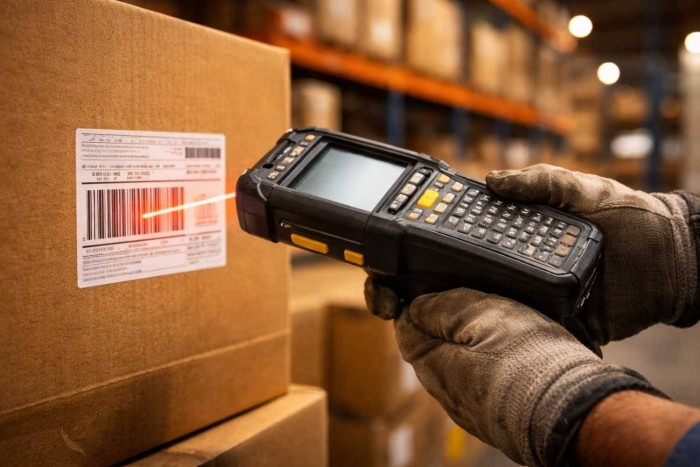
Once a defect is confirmed, the scope question decides everything: how many units, and which ones. Recalling too many is ruinously expensive and erodes trust. Recalling too few leaves dangerous products in the field. Precision here depends entirely on how well each unit was tagged on its way out the door.
Traceability runs on identifiers, and different ones carry different resolution:
| Identifier | What it pinpoints | Typical use |
| Serial number | A single unique unit | Electronics, appliances, high-value goods |
| Batch or lot code | A group made together from shared inputs | Food, pharmaceuticals, chemicals, fasteners |
| VIN | One specific vehicle and its build record | Cars, trucks, motorcycles |
| RFID or QR tag | A unit plus live data scanned through the chain | Logistics, pharma, apparel |
| Digital product passport | A full component and material history | EU-regulated goods, batteries, increasingly standard |
The power of a good identifier is narrowing. A lot code can take a claim of millions of units and reduce the real recall to a single production window, sparing everything made before and after. A VIN lets a carmaker tie one vehicle to the exact supplier, line, and date that produced its faulty part.
This is why modern manufacturers invest heavily in marking and scanning. The identifier printed or embedded at the point of assembly is the thread that, months or years later, lets them pull one defective needle out of an enormous haystack instead of burning the whole haystack down.
The Data Systems Behind a Recall
An identifier is only useful if something stores what it means. That job falls to a stack of enterprise systems that together hold the genealogy of every product: what went into it, who made each part, and where it ended up.
Three systems do most of the work. Product lifecycle management, or PLM, holds the design history and the bill of materials, the structured list of every component. Enterprise resource planning, or ERP, tracks procurement and which supplier shipments fed which production runs.
Manufacturing execution systems record the floor-level detail, down to the line, shift, and sometimes the machine. When a defect surfaces, investigators run these in reverse: start from the failing part, pull its bill of materials, and trace back to the supplier lot it came from.
Then comes the decisive question: what else used that same lot? A single bad batch of a cheap component can appear across several product lines and model years at once. The airbag inflator recalls of the past decade are the clearest example, where one supplier's defective part forced recalls across more than a dozen automakers. Without linked systems, scope is a guess. With them, scope becomes a query, and that query defines how large the recall has to be.
Deciding What Counts as a Defect
Not every flaw becomes a recall. Between detection and action sits a judgment call that is part engineering, part law, and part risk math. A cosmetic blemish and a brake that can fail are both defects, but only one triggers the machinery.
The tool most teams use is risk scoring that weighs two things. Severity asks how bad the outcome is if the defect causes harm; probability asks how likely that outcome is across the units in the field. A low-probability flaw with a catastrophic outcome can outrank a common but harmless one, which is why a rare steering fault is acted on faster than a frequent rattle.
Regulators formalize this: in the US, a vehicle recall hinges on whether a defect poses an unreasonable risk to safety, a standard that is deliberately a judgment rather than a fixed number.
This is also where humans still beat the algorithms. A model can flag a cluster and rank its risk, but deciding that a pattern is a genuine safety defect, and accepting the consequences of saying so, remains a human call made by engineers and safety officers. The data narrows the question. People still have to answer it.
When Defects Reach the Road
For most of this pipeline a defect is still just data. The detection flags it, the systems trace it, the risk model scores it. But some defects reach people before the system closes in, and vehicles are where that gap turns physical fastest.
A faulty component in a car, a truck, or a motorcycle is not a line on a dashboard once someone is riding on it. The same identifiers and records that make a recall precise also become the factual backbone for understanding a failure after it has already caused harm:
● A brake or tire component traced to a specific defective lot can explain why a vehicle behaved the way it did in the seconds before a crash.
● A recall notice issued weeks or months earlier establishes that the manufacturer already knew about the risk, and when.
● Service and repair records show whether a known fix was ever applied to that particular unit.
Motorcycles make the stakes especially stark, because the margin for a component failure is so thin. There is no crumple zone and no second chance when a part lets go at speed, so a defect that might cause a minor incident in a car can be life-altering on a bike. When that happens, the recall record and the traceability data stop being manufacturing tools and become evidence of what failed and who knew.
This is why someone dealing with the aftermath of a crash tied to a faulty part will often work with a specialist such as a Motorcycle Accident Lawyer West Palm Beach, whose work leans heavily on exactly this documentation: recall filings, part genealogies, and the timeline of what the maker knew and when. The data trail built for quality control ends up carrying a second, unintended purpose.
Reaching Millions of Owners
Suppose a company has done everything right so far. It has detected the defect, traced the exact units, and decided to recall. Now comes the stage that quietly defeats the whole effort: actually reaching the people who own the product.
The tools are more sophisticated than they used to be. Automakers can match vehicle identification numbers to registration data to find current owners, and manufacturers increasingly use email, SMS, and in-app alerts alongside the traditional mailed letter. Connected vehicles can even display a recall notice on the dashboard. On paper, finding owners should be easy.
In practice it is not, and the numbers are sobering. US vehicle recall completion rates often sit well below full coverage, and a meaningful share of recalled vehicles are never repaired at all. The reasons are mundane but stubborn: owners move and registration data goes stale, products are resold secondhand with no record of the new owner, notices are mistaken for junk mail, and many people simply never bother.
The problem compounds for cheaper consumer goods. A car at least has a registration trail. A recalled blender, crib, or space heater often has no registration at all, so the manufacturer has no direct line to the buyer and must rely on press releases and retailer alerts. The further a product sits from a formal ownership record, the more a recall depends on luck and attention rather than data, and that is precisely where the technology still falls short.
Tracking the Fix
A recall is not finished when notices go out. It is finished, in principle, only when the defective units are repaired, replaced, or accounted for, and tracking that remainder is its own data discipline.
Every unit moves through a lifecycle the manufacturer has to watch in aggregate. The same identifiers used to scope the recall now track its progress, flipping each unit from affected to remedied as the fix is confirmed:
● Repair completion, logged when a dealer or service center performs the fix and reports the serial or VIN back to the manufacturer.
● Parts logistics, because a recall is useless if the replacement parts are not manufactured and distributed in time, a bottleneck that can stall large recalls for months.
● Remaining-in-field counts, the running total of units still unaccounted for, which is the number regulators watch most closely.
Manufacturers and agencies monitor all of this through dashboards that update as reports come in. A healthy recall shows a steady climb in completion and a shrinking population still at risk. A stalled one shows the curve flattening with a large remainder, which can trigger renewed outreach, second and third notices, or regulatory pressure. In the end the technology that opened the recall by spotting a defect is the same technology that closes it, by proving, unit by unit, that the defect has been dealt with.
What Recall Data Reveals
A recall feels like a failure, and for the unit involved it is. But the data a recall generates is one of the most valuable quality signals a company ever gets, and the smart ones treat it as fuel rather than embarrassment.
Aggregated across time, recall and warranty data expose patterns no single incident can. A component that keeps appearing in failures across unrelated products points to a bad supplier rather than bad luck. A fault that clusters in a particular climate or usage pattern reveals a design assumption that did not survive the real world. Fed back into engineering, these findings close the loop between how a product was designed and how it actually breaks.
This is the foundation of predictive quality. Instead of waiting for warranty claims to spike, manufacturers increasingly model which components are most likely to fail based on the history of similar parts, then intervene before a defect ships at volume. The goal is to move detection upstream, catching the problem in design or early production rather than in the field.
There is a broader benefit too. Public recall databases let regulators, researchers, and even competitors spot systemic risks, such as a single supplier whose parts show up in failures across an entire industry. The recall that looks like one company's problem is often the early warning for everyone using the same part, and reading that signal is becoming a core safety discipline in its own right.
Where Recall Technology Is Heading
The pipeline described so far is already impressive, but it is also mid-transformation. Several shifts are changing what a recall will look like over the next decade.
● Predictive defect detection, where machine learning models trained on historical failures flag at-risk components before they fail in volume, pushing the whole process from reactive to preventive.
● Digital product passports, a regulatory push led by the European Union, which will require certain goods such as batteries to carry a complete, queryable record of their materials and history, making precise traceability a legal baseline rather than a competitive edge.
● Richer traceability ledgers, where supply chain data is shared across suppliers and manufacturers in tamper-resistant form, so a defective lot can be traced across company boundaries far faster than today.
The most consequential shift may be the quietest: the over-the-air recall. As more products become software-defined, from cars to appliances to medical devices, a growing share of defects are fixed by pushing a software update rather than replacing a part. A connected vehicle can be patched overnight in a driveway, with no letter, no dealer visit, and near-total completion.
That convenience carries a catch worth naming. An over-the-air fix is only as trustworthy as the company and the connection delivering it, and it blurs the line between a safety recall and a routine update. The technology that makes recalls faster also makes them easier to issue quietly, and that trade-off is one the next generation of rules will have to address.
The Takeaway
Go back to that faint upward tick on the chart. Between that first signal and the moment a defective product is finally off the road sits an enormous, mostly invisible machine: detection models, traceability codes, linked enterprise systems, risk scoring, owner registries, and completion dashboards, all working to answer a deceptively simple set of questions. What is wrong, which units have it, where are they, and have they been fixed.
The lesson underneath all of it is that the hard part of a modern recall is rarely the repair. It is the information problem of finding every affected unit and every owner, at a scale of millions, with data that is always a little stale and never quite complete.
That is why recall technology deserves more attention than it gets. It is one of the largest safety systems most people will never see working, quietly deciding whether a known defect gets caught and removed or slips through and causes harm. When it works, nothing happens, which is exactly the point.








Comments