
In an age where data moves at the speed of light, the question isn’t whether artificial intelligence can analyze markets, it’s whether it can understand them better than humans. Financial markets are a blend of logic and emotion, and predicting them has always been as much an art as a science.
Yet AI is challenging this balance head-on.
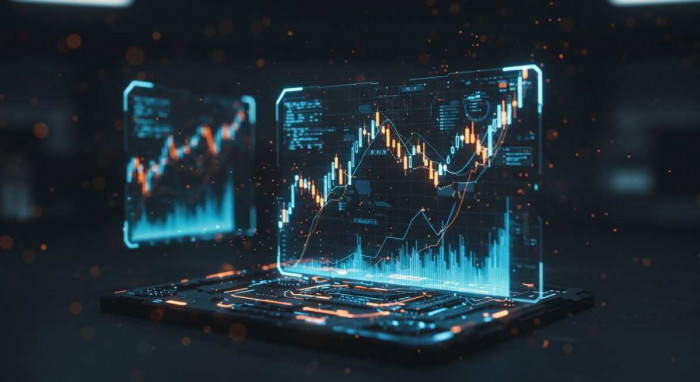
AI models thrive on patterns. They digest years of historical price data, global economic indicators, consumer sentiment, and even social media chatter, extracting correlations invisible to the human eye. Machine learning algorithms can process millions of data points every second, evolving in real-time as new information floods in. For traders and institutions, this means faster reactions, more accuracy in short-term forecasts, and fewer emotional biases.
Human analysts, however, bring something the machines don’t: context, instinct, and an understanding of chaos. Markets are influenced by geopolitics, cultural shifts, and psychology, all of which resist strict modeling. An analyst senses when optimism in a sector isn’t driven by fundamentals but by hype. AI, on the other hand, often assumes that data trends are destiny.
The truth is, AI doesn’t replace analysts; it transforms them. It handles the computational heavy lifting, freeing experts to interpret results rather than crunch numbers. The best forecasts emerge when quantitative precision meets qualitative judgment, when machine learning models flag opportunities and humans apply perspective.
As market data deepens and algorithms grow more sophisticated, AI will continue to outperform humans in speed and scale. But markets are not static systems; they evolve with human behavior. For now, the smartest approach lies not in choosing between AI and analysts, but in letting one amplify the other.
The future of market prediction likely lies in hybrid intelligence a collaboration where machines continuously learn from human intuition, and analysts refine those insights with context and caution. As new forms of data, from consumer sentiment to environmental trends, become accessible, the models will only get sharper. Yet, the human element will remain the balancing force that turns pure data into actionable wisdom. Ultimately, the most successful investors won’t be those who rely solely on algorithms or emotion, but those who know when to trust both.






Comments