
Workers’ compensation used to depend on paper files, delayed reporting, and the experience of individual adjusters. That model is being replaced by systems that collect injury information in real time, connect medical and operational data, and use analytics to flag which claims are likely to become expensive, disputed, or medically complex.
This shift is not a cosmetic technology upgrade. It is changing how employers report injuries, how carriers assign resources, how legal teams evaluate risk, and how quickly an injured worker gets the right intervention. In practical terms, workers’ compensation is moving from reactive administration to measurable decision-making.
Why the shift is happening now
The main reason workers’ compensation is becoming more data-driven is that the industry finally has access to usable digital information across the full life of a claim. Electronic first notice of loss, digital claims platforms, telehealth workflows, electronic medical billing, and automated document processing have turned once-fragmented records into structured data that can be searched, scored, and compared.
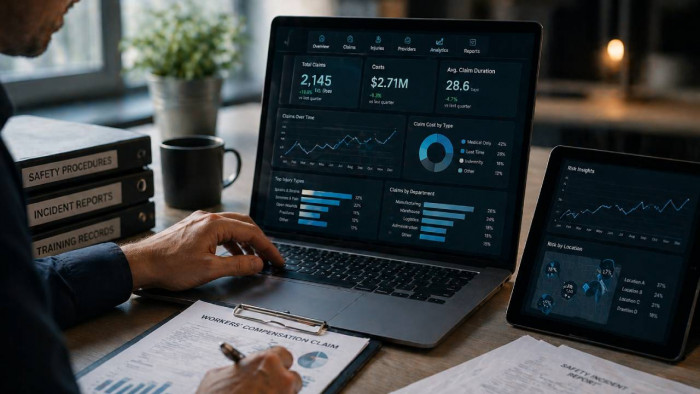
That matters because the outcome of a claim is heavily influenced by what happens early. A missed reporting detail, delayed clinical referral, slow employer response, or weak return-to-work plan can push a manageable case into prolonged disability or litigation. Once organizations began measuring those early variables, it became easier to see where claims go off course and where intervention produces the best return.
Another factor is cost pressure. Employers want tighter control over lost-time trends, claims leakage, and injury frequency by site or role. Carriers want more accurate reserving, faster case handling, and better identification of high-severity files before costs escalate. Data makes those goals achievable in a way that manual review alone never could.
Better data is changing the first days of a claim
Workers’ compensation outcomes often depend on the first 24 to 72 hours after an injury. That period affects how quickly a claim is reported, whether the medical picture is documented correctly, whether restrictions are understood, and whether the worker feels informed or ignored.
Digital intake systems improve those first steps by forcing cleaner data capture. Instead of relying on handwritten incident descriptions or delayed email chains, employers can submit structured injury reports through guided forms that standardize fields such as body part, mechanism of injury, time of event, witnesses, and job activity. That creates cleaner records and reduces ambiguity later in the case.
Better intake also improves downstream analysis. When injury data is consistent across locations and departments, organizations can identify patterns more reliably, compare outcomes between facilities, and see which kinds of incidents are producing avoidable costs. A bad intake process does not just slow one claim; it weakens the quality of the entire claims dataset.
Predictive analytics is changing triage
Predictive analytics is one of the biggest reasons workers’ compensation cases are becoming more data-driven. These models evaluate historical outcomes and compare them against the characteristics of new claims to estimate the likelihood of adverse developments such as extended lost time, surgery, legal escalation, opioid complexity, or unusually high total cost.
That changes the way a claim enters the system. Instead of treating all files as operational equals until problems appear, organizations can rank claims by risk and intervene earlier. A routine soft-tissue injury may need standard handling, while a similar claim with certain medical, occupational, or communication indicators may be flagged for nurse case management, closer supervision, or faster employer accommodation planning.
This is valuable because claims resources are limited. Senior adjusters, clinical specialists, and employer return-to-work teams cannot intensively manage every file. Data-driven triage helps direct those resources where they are most likely to reduce disability duration, litigation risk, and total incurred cost.
Claims administration is becoming more automated
Workers’ compensation has always involved a large amount of administrative work: intake review, medical record handling, billing review, document indexing, follow-up tracking, and communication logging. Artificial intelligence and workflow automation are changing that workload significantly.
Modern claims platforms can now extract data from documents, identify missing information, classify incoming records, route files by complexity, and surface anomalies that require human review. This does not remove judgment from the process, but it reduces the amount of low-value manual work that used to absorb adjuster time.
The impact is operationally important. When adjusters spend less time re-entering information or searching through scattered records, they can focus on compensability analysis, worker communication, reserve management, treatment progression, and settlement strategy. In a system where delays compound quickly, reducing administrative friction has direct claim value.
Medical management is becoming more measurable
Medical care is often the most expensive part of a workers’ compensation claim, which is why the industry is increasingly using data to evaluate treatment patterns rather than simply paying bills as they arrive. Claims teams now have better visibility into provider behavior, treatment duration, pharmacy activity, utilization patterns, and whether a case is tracking toward a normal or abnormal recovery path.
That makes it easier to identify issues early. A claim that appears routine on the surface may start showing markers of prolonged disability, excessive treatment frequency, inconsistent work restrictions, or unusually fast cost accumulation. Data-driven monitoring allows those files to be escalated before the situation becomes harder to control.
This is also changing conversations with providers and employers. Instead of discussing return-to-work in general terms, stakeholders can compare duration patterns, identify where restrictions are not being accommodated, and evaluate whether treatment progression aligns with what similar injuries normally require.
Fraud detection is becoming more precise
Fraud review in workers’ compensation is also becoming more data-driven. Traditional fraud detection often depended on obvious inconsistencies or the instincts of experienced investigators. While that judgment still matters, advanced analytics can now compare billing behavior, treatment frequency, provider relationships, claim timing, and narrative patterns across much larger datasets.
That improves both speed and precision. Suspicious billing clusters, duplicate services, unusual provider patterns, and claim characteristics that do not match expected trajectories can be identified earlier, often before significant leakage builds. The result is not just more aggressive fraud screening, but smarter screening that focuses investigative effort where it is justified.
Just as importantly, better analytics can reduce noise. When systems become more accurate at separating unusual but legitimate claims from truly questionable ones, organizations can avoid wasting time on weak fraud suspicions while concentrating on meaningful risk.
Return-to-work programs are now data systems
Return-to-work used to be handled as a human resources or supervisor function with limited measurement behind it. Today, it is increasingly managed as a performance system supported by data on injury duration, restrictions, accommodation success, job demands, location trends, and provider outcomes.
This changes the quality of decision-making. Employers can see which facilities keep workers out longer for similar injuries, which modified-duty options actually reduce lost time, and where communication breakdowns are preventing timely reintegration. That makes return-to-work less dependent on informal effort and more dependent on repeatable process.
This shift also helps connect workers’ compensation to prevention. When claims data is linked with safety records, organizations can identify which tasks, shifts, tools, or departments are producing recurring injuries and then redesign training, staffing, ergonomics, or workflow before the next claim occurs.
Legal strategy is changing with the data
The legal side of workers’ compensation is changing as claim files become more digital and more measurable. Better timestamps, communication records, medical histories, and workflow data create a clearer record of what happened and when. That can affect disputes involving notice, treatment, disability duration, compensability, and the reasonableness of claim handling.
It also changes case evaluation. Lawyers can assess whether a claim is following a familiar high-cost pattern, whether medical utilization looks excessive or defensible, whether delay played a role in claim deterioration, and whether settlement assumptions are supported by comparable outcomes rather than intuition.
For both claimant and defense counsel, this means workers’ compensation strategy increasingly depends on understanding the operational side of a claim, not just the legal arguments. The stronger advocate is often the one who can interpret the facts inside the data trail as clearly as the facts in the statute or medical report.
In complex or high‑exposure claims, injured employees increasingly benefit from counsel who can read both the case law and the analytics behind a modern claim file. For example, a seasoned Chicago workers compensation lawyer will typically review digital claim histories, treatment patterns, and insurer handling data alongside statutory requirements and medical evidence to shape a more informed strategy for their client.
Why the business case is so strong
Workers’ compensation is becoming more data-driven because the financial case is hard to ignore. Better intake, stronger triage, earlier intervention, faster processing, improved fraud detection, and more consistent return-to-work planning all reduce avoidable claim cost.
But the value is not limited to direct payments. A poorly managed claim also creates overtime pressure, staffing disruption, productivity loss, worker frustration, compliance exposure, and in many cases legal expense that could have been avoided with better early handling. Data helps organizations address those secondary costs before they accumulate.
That is why many employers and carriers now view workers’ compensation technology as an operational investment rather than a back-office expense. The function touches workforce stability, legal risk, medical spend, and business continuity all at once.
The risks of getting it wrong
A more data-driven system is not automatically a better one. If the underlying data is incomplete, inconsistent, or biased, the resulting analysis can create false confidence and poor decisions.
That is especially important in predictive modeling. A risk score is only useful if the data behind it is reliable and the organization understands what the model can and cannot explain. Without strong governance, analytics can oversimplify complex human cases and encourage teams to trust the score more than the facts.
Privacy and fairness also matter. Workers’ compensation data often includes sensitive medical and employment information, so organizations need clear controls around access, security, transparency, and responsible use. The more advanced the analytics, the more important those safeguards become.
What comes next
The next phase of workers’ compensation will likely involve deeper integration across claims, safety, HR, medical management, and legal operations. Instead of reviewing each part of the process separately, organizations are moving toward connected systems that update risk signals continuously as new information arrives.
That will make the field even more data-driven than it is now. The strongest programs will use data not only to manage claims after injuries happen, but to redesign prevention efforts, improve worker communication, strengthen return-to-work pathways, and reduce the chances of claim escalation from the beginning.
That is the real reason workers’ compensation cases are becoming more data-driven. The industry has learned that the earlier it can detect risk, measure the right variables, and respond with precision, the better the result for cost, speed, and claim stability.





Comments