
In August 2025, a Miami federal jury ordered Tesla to pay $243 million over a fatal Autopilot crash, the first wrongful death verdict ever returned against the company’s driver assistance system. The deciding evidence was a “collision snapshot” Tesla had said it could not locate, until an independent forensic researcher pulled it from the car’s Autopilot computer and showed the system had registered the victim 116 feet before impact. A federal judge upheld the verdict in February 2026. The lesson lands well beyond one automaker: the most reliable witness at a modern crash scene is the vehicle itself, and the legal teams equipped to preserve, decode, and authenticate its data now hold a structural advantage.
From Five-Second Snapshots to Rolling Data Centers
Event data recorders entered passenger vehicles alongside airbag controllers, and federal rule 49 CFR Part 563 standardized them in 2012, requiring 15 data elements such as speed, brake status, throttle position, and seatbelt use whenever a recorder is installed. Installation is technically voluntary, yet NHTSA estimates 99.5% of model year 2021 light vehicles carry a compliant EDR, which is why the agency withdrew its proposed mandate back in 2019 as unnecessary.
The recording window is now expanding sharply. A NHTSA final rule published in December 2024 stretches required pre-crash capture from 5 seconds sampled at 2 Hz to 20 seconds sampled at 10 Hz, replacing 10 data points per parameter with 200. The rule took effect in January 2025 with compliance set for September 2027, and a November 2025 proposal would shift that date to September 2028 with a phase-in while leaving the technical requirements untouched. Europe moved on a parallel track: EU Regulation 2019/2144 has required an EDR in every newly registered car and van since July 7, 2024, with heavy trucks and buses following for new vehicle types in 2026 and all registrations by 2029.
The EDR itself stores only kilobytes. The vehicle around it is another matter. Research funded by the US Department of Homeland Security counts roughly 70 onboard computers spread across five internal networks in a typical modern car, generating about 25 gigabytes of data per hour. McKinsey projects that 95% of new vehicles sold globally will be connected by 2030, roughly double the share when it published that analysis in 2021. Litigation has simply followed the data.
What a Modern Vehicle Records, Layer by Layer
Counsel and forensic vendors increasingly map evidence strategy to the vehicle’s data architecture, because each layer has a different custodian, retention period, and retrieval path. The table below summarizes the layers that decide cases.
| Data layer | What it captures | Litigation relevance |
| Event data recorder | Speed, braking, throttle, steering input, seatbelt status, and crash forces for seconds around a triggering event | Core of crash reconstruction; establishes pre-impact driver and vehicle behavior |
| Telematics and connected services | Continuous GPS, trip history, and driving behavior streamed to manufacturer or vendor servers | Places vehicles at locations, tests witness accounts, supports negligence and coverage disputes |
| ADAS and camera systems | Object detection logs, lane and alert events, and short video or sensor clips | Shows what safety systems perceived and how they responded; decisive in the Tesla Autopilot verdict |
| Infotainment | Paired phone call logs, messages, contacts, navigation history, plus door and gear shift events | Proves distraction, occupancy, routes, and minute-by-minute timelines |
| Commercial fleet systems | Electronic logging device hours, dashcam footage, dispatch records, and engine control module data | Demonstrates driver fatigue, policy violations, and employer knowledge in trucking cases |
Infotainment is the sleeper layer. Pairing a phone routinely copies call logs, messages, and contact lists into the head unit, where they persist after the phone leaves the vehicle. Berla, the DHS-backed vendor whose iVe toolkit dominates this niche, supported about 80 vehicle models at its 2013 launch and more than 20,700 vehicle system types by 2022, and its extractions have anchored testimony in criminal trials. Civil practitioners now use the same acquisitions to reconstruct the minutes before a collision.
Discovery Now Starts at the Crash Site
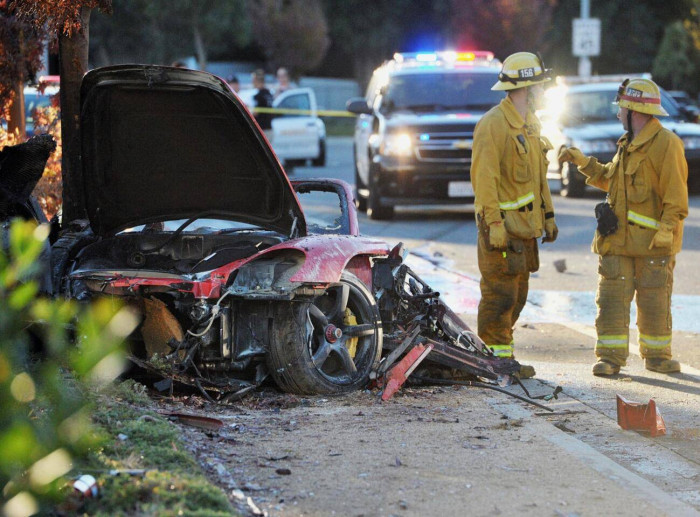
Connected vehicle evidence has inverted the litigation timeline, because the most probative data has the shortest shelf life. Federal regulations require motor carriers to retain electronic logging device records for only six months under 49 CFR 395.8, and engine control module or telematics data can be overwritten within days once a truck returns to service. Under Federal Rule of Civil Procedure 37(e), courts can sanction parties, up to adverse inference instructions, for electronically stored information lost after the duty to preserve attaches, and a preservation letter is what fixes that moment in time.
Plaintiff practices have rebuilt intake around this clock. Trial firms built on catastrophic truck and vehicle cases, such as Langdon & Emison, treat the first days after a wreck as an evidence race, dispatching preservation demands before routine overwrite cycles erase the record. Generic requests for “all documents” no longer work; defense counsel read vague demands narrowly, so effective letters name each system. A modern preservation demand typically covers:
• EDR and engine control module downloads from every involved vehicle, including trailers
• Electronic logging device records covering roughly 90 days before the crash, not just the day of the event
• GPS and telematics data held by fleet platforms, vehicle manufacturers, and third-party vendors
• Forward-facing and driver-facing dashcam footage along with ADAS event logs
• Dispatch communications, driver cellphone records, and maintenance histories that contextualize the data
The stakes justify the rigor. FMCSA data shows more than 5,000 people die in large truck crashes in the United States each year, and an increasing share of those cases turns less on witness memory than on whose data survived the first month.
Legal Tech Builds an Automotive Evidence Stack
Tooling that began in law enforcement has crossed into civil practice and is now a recognized market category. MarketsandMarkets values the global digital forensics market at $12.94 billion in 2025, heading toward $22.81 billion by 2030 at roughly 12% annual growth, and research firms now break out automotive forensics as a distinct segment. Crash data retrieval hardware, infotainment acquisition kits, and cloud-based reconstruction platforms feed extractions into the same review and case management systems that handle email and documents, while AI-assisted simulation and virtual reality scene presentations translate raw parameters into exhibits juries can absorb.
Authentication workflows matured alongside the tools. Federal Rules of Evidence 902(13) and 902(14), added in 2017, let machine-generated records and verified forensic copies self-authenticate through technician certifications and hash values, sparing parties the cost of live foundational testimony for every download. Capabilities that now define an automotive-ready legal tech stack include:
• Ingestion support for proprietary vehicle formats, from Part 563 EDR reports to infotainment file systems
• Automated preservation tracking that logs when demands went out and which custodians acknowledged them
• Hash-verified imaging and certification templates aligned with Rules 902(13) and 902(14)
• Version awareness, since the 20-second, 10 Hz EDR format will require updated retrieval tools across manufacturers
Privacy Enforcement Is Redrawing the Data Supply Chain
The same data stream feeding courtrooms became a regulatory liability for the companies collecting it. Mozilla’s September 2023 review of 25 car brands found every one failed its privacy standards, with 84% sharing personal data with service providers and brokers, 76% saying they can sell it, and 56% willing to hand data to government on requests as light as informal ones. Six months later, reporting on General Motors’ sale of driving behavior data to brokers serving insurers triggered the collapse of that pipeline: GM shut down its Smart Driver program in April 2024 and severed its broker relationships.
Enforcement followed fast, and the timeline matters for anyone planning evidence strategy around manufacturer-held data.
| Date | Action | Why it matters |
| Sept 2023 | Mozilla fails all 25 reviewed car brands on privacy | Put collection scope on the public record; 84% shared data, 76% claimed the right to sell it |
| Aug 2024 | Texas sues GM over data from 1.8 million state residents | Alleged collection technology on 14 million vehicles; Arkansas and Nebraska later filed similar suits |
| Jan 2025 | Texas sues Allstate and its Arity unit over data on 45 million Americans | First enforcement under the Texas Data Privacy and Security Act, reaching app-embedded tracking kits |
| July 2025 | California SB 1394 obligations begin | Manufacturers must cut an abuser’s remote vehicle access within two business days of a verified request |
| Jan 2026 | FTC finalizes 20-year consent order against GM and OnStar | Five-year ban on sharing geolocation and behavior data with consumer reporting agencies; consent, access, and deletion rights required |
The FTC complaint described collection as frequent as every three seconds, and GM disclosed roughly $300 million in third quarter 2025 accruals tied to related investigations and litigation. For litigators, every order and statute redraws the evidence map: it changes what data exists, who holds it, and what process retrieval requires. The Driver Privacy Act of 2015 already vests EDR ownership in the vehicle owner or lessee, so retrieval runs through consent, court order, or narrow safety research exceptions, and GDPR imposes comparable gatekeeping on the new European recorders.
Admissibility Hurdles That Still Decide Cases
Courts admit vehicle data routinely, but never automatically, and the defense playbook is sharpening. In comments on the NHTSA rule, SAE International argued that 20 seconds of pre-crash data captures conduct unrelated to causation, a preview of context and interpretation fights to come. Proprietary formats mean raw hex requires validated decoding, a salvage-yard chain of custody invites challenge, and reconstruction experts face full Daubert scrutiny.
| Evidentiary hurdle | The challenge | Emerging practice |
| Authentication | Proving records came from this vehicle and arrived unaltered | Rule 902(13) and 902(14) certifications backed by hash-verified imaging |
| Chain of custody | Vehicles get repaired, resold, or scrapped before suit is filed | Early inspection orders, in-place acquisition, and documented handling at every transfer |
| Interpretation | Proprietary parameters and sampling artifacts invite competing readings | Manufacturer-validated retrieval tools paired with independent expert review |
| Scope and privacy | Recorders capture conduct beyond the incident window | Protective orders and requests targeted to the crash interval |
Where Vehicle Data Heads Next
Software-defined vehicles turn the evidentiary baseline into a moving target. Over-the-air updates mean the code governing a vehicle at the moment of a crash may differ from the code present at inspection months later, so discovery requests increasingly demand software version histories alongside sensor logs. The hardware mandates keep widening the pipeline: Europe’s recorder requirement reaches new heavy truck and bus types in 2026 and all registrations by 2029, while NHTSA’s 20-second, 10 Hz format arrives with the 2028 compliance window under the agency’s proposed schedule. The Tesla verdict, sustained on post-trial review in February 2026, signals the larger shift: as liability migrates from driver to system, ADAS perception logs become the central exhibit, and manufacturers, insurers, and autonomous fleet operators all become data custodians and defendants at the same time.
The Bottom Line
Connected vehicle data has converted crash litigation into a data engineering discipline. Nearly every new vehicle ships with a standardized recorder, regulators on two continents are multiplying what it must capture, and privacy enforcement is simultaneously restricting how that data moves. Advantage now belongs to the side that preserves first, decodes correctly, and authenticates cleanly, which is why preservation automation, vehicle-format ingestion, and certification workflows have moved from niche features to core requirements in legal technology roadmaps. The witness pool changed; the tooling is catching up.








Comments