
AI writing tools have reached a point where producing grammatically clean content is easy. What remains difficult is producing writing that actually feels human. Readers today are surprisingly sensitive to tone patterns, rhythm, and the subtle signals that separate lived experience from generated text.
The goal is not to avoid AI. The goal is to use AI in a way that preserves voice, credibility, and reader trust. When done well, AI becomes an accelerator. When done poorly, it becomes instantly detectable.
This guide breaks down how to use AI effectively while keeping your writing grounded, natural, and distinctly human.
Why AI Writing Often Feels Artificial
Before fixing the problem, it helps to understand why AI-assisted content sometimes feels off.
Most AI systems are optimized for clarity and probability, not personality. They tend to produce text that is:
● Structurally clean
● Emotionally neutral
● Slightly repetitive in rhythm
● Overly balanced in tone
Human writing, by contrast, contains friction. Sentence lengths vary. Opinions carry weight. Imperfections create texture. When everything reads too smoothly, readers subconsciously disengage.
The task is not to remove AI from the workflow. It is to reintroduce human texture after AI has done the heavy lifting.
Where AI Helps Writers the Most
Used correctly, AI meaningfully improves several parts of the writing process.
Draft Acceleration
AI is excellent at producing rough first drafts, outlines, and structural variations. This eliminates blank-page resistance and speeds up early-stage production.
Research Summarization
AI tools can quickly synthesize background information, helping writers scan large topic areas faster. This is particularly useful during early ideation.
Content Repurposing
Turning a long article into social posts, summaries, or alternate formats is one of AI’s strongest use cases. This is mechanical work where automation adds clear value.
The key insight is simple: AI is strongest at structure and speed, not at voice and judgment.
Where Human Writers Still Matter Most
Even the best models struggle in areas that experienced writers handle intuitively.
Human writers still lead in:
● Audience sensitivity
● Narrative pacing
● Emotional credibility
● Strategic positioning
● Original insight
This is why the best results come from collaboration, not replacement.
Practical Techniques to Make AI Writing Sound Human
Start With Your Own Angle First
Before opening any AI tool, clarify the core point or opinion the piece needs to express. AI performs best when guided by a strong human perspective.
Writers who skip this step often end up with technically correct but directionless content.
Strong process:
Human angle → AI draft support → Human refinement.
Weak process:
AI generates topic → AI writes draft → minimal editing.
The difference in output quality is significant.
Break the Rhythm Intentionally
AI tends to produce evenly sized sentences with predictable flow. Human writing benefits from variation.
During editing, deliberately:
● Mix short and long sentences
● Add occasional conversational phrasing
● Remove overly symmetrical structures
● Introduce controlled emphasis
These small adjustments dramatically improve natural readability.
Add Specificity AI Cannot Invent
Generic writing is the fastest way to trigger the “this feels automated” reaction.
To counter this, layer in:
● Real workflow observations
● Specific use cases
● Subtle trade-offs
● Nuanced caveats
Concrete detail signals authenticity. Vague generalization signals automation.
Inject Controlled Imperfection
Perfectly polished text can feel synthetic. Human writing usually contains mild asymmetry in tone and structure.
This does not mean adding errors. It means allowing:
● Slight tonal shifts
● Occasional informal phrasing
● Natural emphasis patterns
● Opinionated moments where appropriate
The goal is credible texture, not sloppiness.
AI Tools That Help Without Over-Automating
Below are widely used tools that support human writers rather than replace them.
Grammarly

Website: https://www.grammarly.com
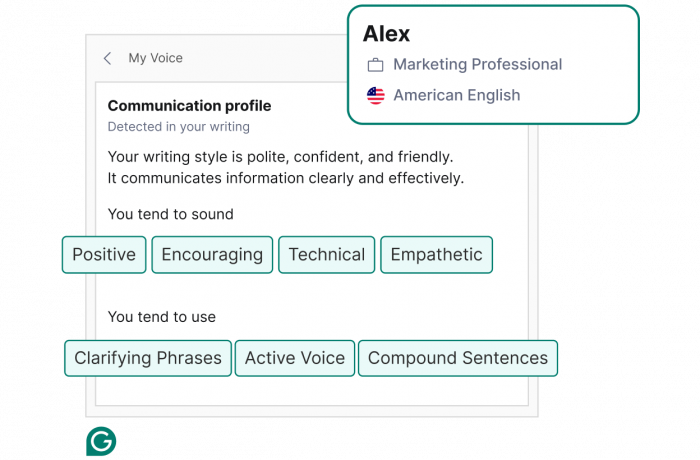
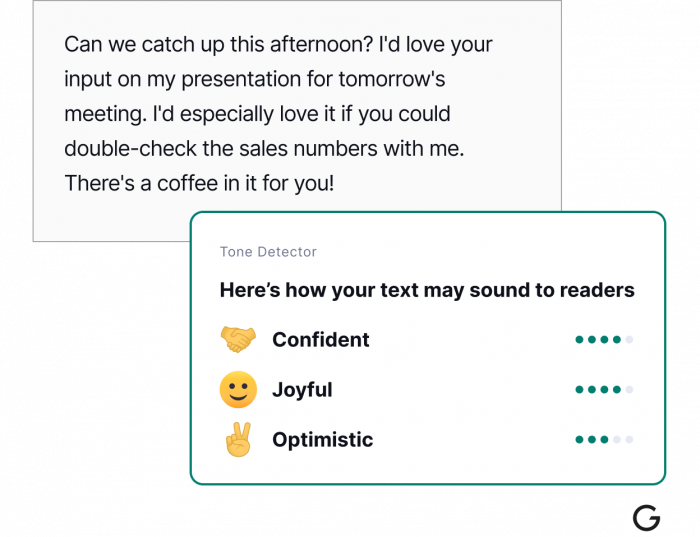
Grammarly functions best as a polishing layer rather than a content generator. It focuses on grammar, clarity, tone suggestions, and readability improvements.
What it does well
Grammarly helps clean mechanical errors while preserving the writer’s original voice. It is particularly useful during final editing passes when clarity and correctness matter.
Pros
● Excellent grammar and clarity corrections
● Helpful tone detection
● Works across browser and desktop
● Low risk of over-automation
Cons
● Advanced features require paid plan
● Tone suggestions can sometimes over-smooth writing
● Not designed for deep content creation
Best for
Writers who want cleaner output without losing voice.
Notion AI

Website: https://www.notion.so/product/ai
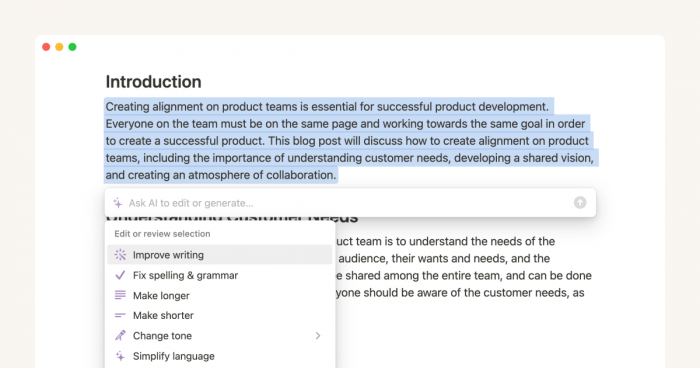
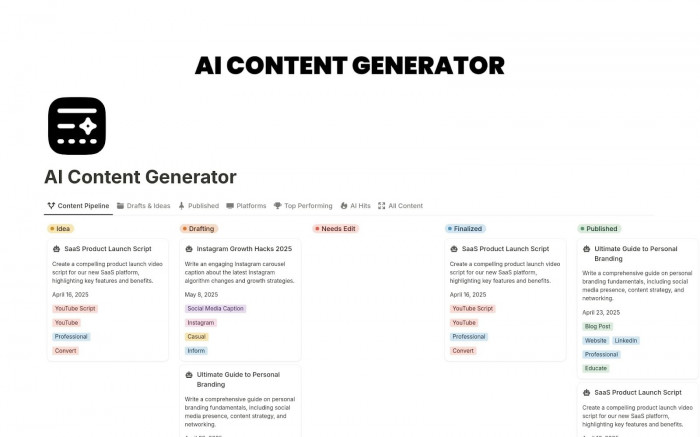
Notion AI works well as a structured drafting assistant inside an organized workspace. It is particularly strong for outlines, summaries, and content expansion.
What it does well
It integrates directly into planning workflows, which helps writers maintain control over structure and direction.
Pros
● Seamless workspace integration
● Good for outlines and summaries
● Useful for structured writing workflows
● Supports collaborative editing
Cons
● Output still needs human voice editing
● Can feel generic if overused
● Requires familiarity with Notion ecosystem
Best for
Writers managing multi-step content workflows.
Jasper


Website: https://www.jasper.ai
Jasper is designed for faster content generation, especially in marketing contexts. It provides templates and guided workflows for different content types.
What it does well
Jasper can produce strong structured drafts quickly, but it requires firm human editing to avoid the “AI voice” effect.
Pros
● Fast structured draft generation
● Strong marketing templates
● Good for ideation bursts
● Team collaboration features
Cons
● Can sound templated without editing
● Higher pricing than some competitors
● Requires strong human oversight for quality
Best for
Teams that need speed but still apply human editorial control.
The Workflow That Produces the Most Human Results
The most reliable process today looks like this:
1. Human defines angle and audience
2. AI assists with structure or draft
3. Human rewrites for voice and clarity
4. AI assists with polishing
5. Human performs final read for flow
When this order is reversed, content quality usually drops.
Common Mistakes That Make AI Writing Obvious
Even strong writers sometimes fall into patterns that expose AI involvement.
Watch for:
● Overuse of balanced sentence structures
● Excessively neutral tone
● Repetitive paragraph openings
● Generic transitions repeated across sections
● Lack of strong point of view
None of these individually proves AI usage. Together, they create the recognizable “AI feel.”
Final Thoughts
Writing with AI without sounding like AI is not about hiding the tool. It is about using it at the right stages of the process.
AI is excellent at acceleration. Humans are still essential for judgment, voice, and narrative weight. The writers who benefit most from AI are the ones who stay firmly in the editorial driver’s seat.
Used carelessly, AI flattens writing. Used deliberately, it frees writers to focus on the parts of the craft that actually move readers.










Comments