
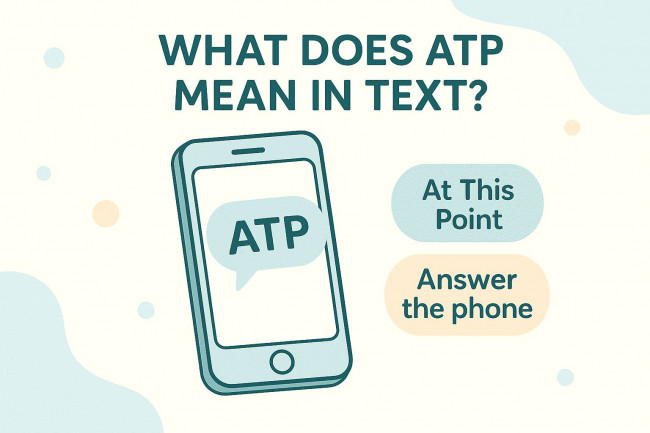
ATP is one of those short, punchy slang terms that show up everywhere in texts, DMs, and comments but its meaning shifts with context. In modern texting, ATP usually means "at this point," though it can also mean "answer the phone" or, less commonly, "all‑time peak" in certain slangy or niche contexts.
What Does ATP Mean in Text?
In texting and social media, ATP most commonly means:
1. At This Point – used to show a current state, conclusion, or emotional tipping point.
● “ATP I’m done trying.”
● “ATP, it’s not even funny anymore.”
Other common meanings in casual chat include:
2. Answer The Phone – used when you’re calling someone and they’re not picking up.
● “ATP, answer the phone, it’s urgent.”
3. All Time Peak – used in a hype or exaggerated sense.
● “His confidence is at ATP right now.”
Because ATP has multiple meanings, context is everything. In most text or social media conversations, if ATP sits before an opinion or feeling (“ATP I’m tired”), it means “at this point.” If it appears with calls and missed calls, it’s likely “answer the phone.”
ATP as a Gen Z Slang Term
Among Gen Z, ATP is most commonly used to mean “at this point,” but its purpose goes beyond marking time. In Gen Z slang, ATP acts as emotional shorthand—signaling frustration, resignation, acceptance, or a final conclusion after repeated experiences. When someone says, “ATP I don’t care anymore,” they’re not talking about the moment itself; they’re expressing a mental or emotional tipping point.
Gen Z conversations often use ATP to:
● Show burnout or emotional exhaustion
● Express acceptance after disappointment
● Indicate a settled opinion or final decision
Examples you’ll frequently see include:
● “ATP I just laugh.”
● “ATP I’m done explaining.”
● “ATP it is what it is.”
Origin and Evolution of ATP Slang
ATP comes from the phrase “at this point,” which has been used in speech for a long time. The abbreviation evolved naturally as people began shortening longer phrases for faster texting and posting.
Key drivers in its evolution:
● The rise of SMS and character‑limited platforms made abbreviations more attractive.
● Gen Z and younger millennials popularized it in group chats, TikTok captions, Twitter/X posts, and Instagram comments.
● Viral memes and screenshots featuring lines like “ATP I don’t even care anymore” helped solidify its usage.
Over time, users started applying ATP flexibly beyond just describing time to capture mood, frustration, resignation, or final decisions.
Real-Life Usage Examples of ATP
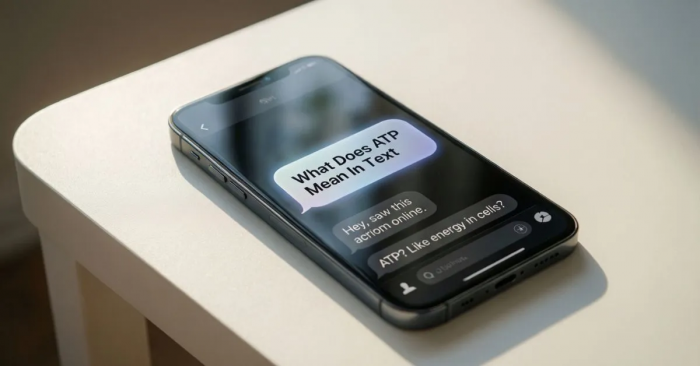
Here are realistic examples showing how ATP works in context:
1. Expressing frustration or exhaustion
● “ATP I’m too tired to argue.”
● “ATP, I just want the day to be over.”
2. Reaching a conclusion or decision
● “ATP we should just cancel the trip.”
● “ATP, I think they’re not serious about this.”
3. Signaling emotional distance or detachment
● “ATP I don’t care what they say.”
● “ATP, it is what it is.”
4. As ‘Answer The Phone’ in urgent chats
● “I’ve called you three times ATP.”
● “ATP ANSWER THE PHONE.”
5. As ‘All Time Peak’ in hype contexts
● “Her music is at ATP right now.”
● “My stress is at ATP this week.”
A quick test: if ATP is followed by a feeling or decision, it’s probably “at this point.” If it’s used alongside calls or urgency, it’s more likely “answer the phone.”
Why Slang Like ATP Became Popular
ATP fits into a broader trend of short, compact slang dominating digital communication. Several reasons explain its popularity:
● Speed and efficiency: Shortcuts save time when people are typing on phones or replying quickly in group chats.
● Character limits: On platforms where space was (or still is) limited, abbreviations like ATP emerged as practical solutions.
● Emotional shorthand: “At this point” often introduces a feeling of giving up, annoyance, or acceptance—something many relate to in memes and day‑to‑day frustrations.
● Identity and in‑group language: Using ATP signals familiarity with current slang, especially for Gen Z; it helps people feel part of a shared digital culture.
● Memes and virality: Screenshots of texts, TikTok story‑times, and relatable posts featuring “ATP I’m…” have made it recognisable and easy to imitate.
How ATP Usage Changes Across Platforms
ATP isn’t used exactly the same way everywhere. Platform culture shapes how people interpret and deploy it.
| Platform | Common Meaning | Usage Context |
| At This Point | Captions, stories, expressing current mood | |
| TikTok | At This Point/Answer the Phone | Urgent calls, expressing feelings |
| Snapchat | At This Point/Answer the Phone | Quick chats, mood updates |
| Twitter/X | At This Point | Live reactions, current opinions |
| At This Point/Answer the Phone | Informal posts, urgent requests |
When You Should Use ATP
ATP works best in casual conversations.
Good places to use ATP:
● Chats with friends
● Social media posts
● Informal group conversations
● Gaming chats
Avoid ATP in:
● Work emails
● Professional communication
● Formal writing
● Academic settings
Not everyone understands slang, so context matters.
Common Confusions About ATP
1. Is ATP rude?
No. But depending on tone, it can sound frustrated or dismissive.
2. Is ATP formal?
No, it’s informal slang.
3. Can ATP offend someone?
Only if used in an angry or sarcastic way.
4. Do adults use ATP?
Mostly younger users and internet-savvy people use it, but usage is spreading.
Final Thoughts: Understanding ATP in Modern Texting
ATP captures a lot of modern online emotion in just three letters, frustration, exhaustion, resignation, and decision‑making. When used with the right audience and in the right context, it keeps your messages snappy and expressive. Just remember to avoid it in formal, serious, or cross‑generational communication, and always rely on context so your meaning is clear.







Comments