
In recent years, more people are reporting a complex set of symptoms that affect not just one organ, but the entire body. This experience is often described in holistic wellness spaces as Kialodenzydaisis a term used to represent a chronic, systemic state of imbalance involving fatigue, inflammation, cognitive fog, digestive disruption, immune instability, and emotional exhaustion.
Although this name is not recognized by conventional medicine, the pattern it describes is very real. Millions worldwide suffer from similar symptom clusters that are difficult to diagnose using standard medical testing. Studies show that nearly 30–40% of patients with chronic fatigue–like symptoms never receive a clear diagnosis, even after extensive testing (NIH, 2022). This gap has led many to seek explanations beyond traditional labels.
Kialodenzydaisis therefore should be viewed not as a disease, but as a functional health state, a sign that the body’s regulatory systems are overwhelmed and struggling to maintain balance.
What This Condition Is Really About
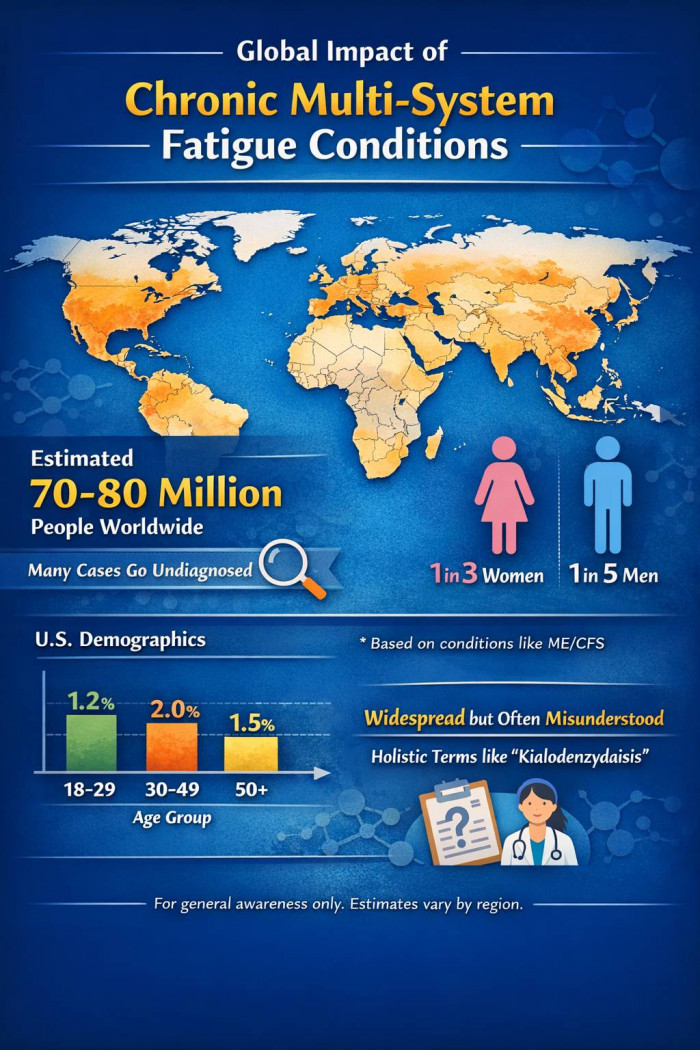
At its core, Kialodenzydaisis reflects breakdown in the body’s communication systems: the immune system, the gut–brain axis, the hormonal network, and the nervous system.
Modern research confirms that these systems do not work independently. They are interconnected through inflammatory signals, neurotransmitters, and hormonal feedback loops. When one system is under chronic stress, the others follow.
People who resonate with this term are often told they are “burned out” or “just anxious.” But studies show that chronic inflammatory markers (such as IL-6, CRP, and TNF-α) are significantly elevated in patients with fatigue syndromes, gut disorders, and stress-related illnesses (Harvard Medical School, 2021). This means the symptoms are not imaginary, they are biochemical.
Kialodenzydaisis is essentially the body’s way of saying:
“I can no longer compensate.”
Why Does Kialodenzydaisis Develop?
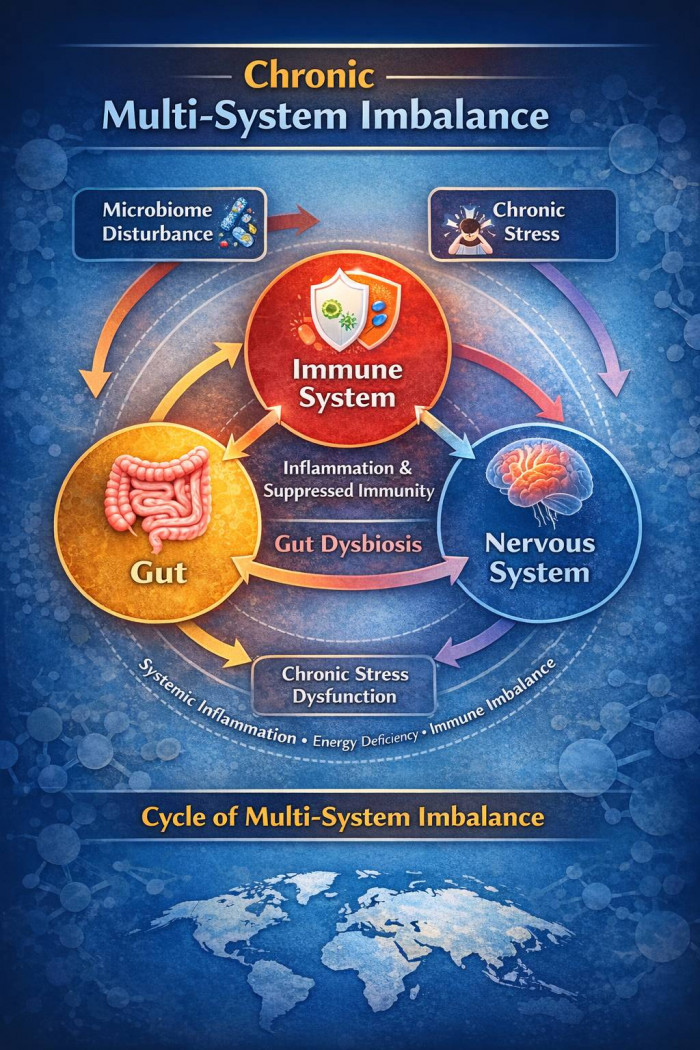
Immune Overload and Chronic Inflammation
Repeated infections, long-term stress, and toxin exposure can keep the immune system in a constant “on” state. Research from the CDC shows that post-viral immune dysregulation can persist for years after infections such as EBV or COVID-19. When inflammation becomes chronic, it disrupts energy production inside the mitochondria, which explains the deep fatigue many experience.
Gut–Brain Axis Breakdown
More than 70% of the immune system is housed in the gut. Damage to the intestinal lining allows bacterial toxins to leak into circulation, triggering inflammation throughout the body. A 2023 meta-analysis in Nature Reviews Gastroenterology found strong links between gut dysbiosis, brain fog, anxiety, and immune dysfunction.
Nervous System Exhaustion
Chronic emotional stress keeps the body in a survival state. This suppresses digestion, sleep, hormone regulation, and cellular repair. Long-term HPA axis dysregulation has been directly associated with fatigue disorders, autoimmune flare-ups, and depression.
Toxic Burden
Heavy metals, pesticides, plastics, and mold interfere with mitochondrial function and liver detox pathways. Studies from the Environmental Working Group show that the average person carries over 200 industrial chemicals in their bloodstream.
Emotional Trauma
Unprocessed trauma alters nervous system signaling and immune responses. Research in Psychoneuroendocrinology confirms that childhood trauma significantly increases the risk of chronic inflammatory illness later in life.
How Healing Can Happen
Healing from Kialodenzydaisis is not about masking symptoms or seeking instant fixes. Instead, it is about restoring the body’s natural regulatory systems immune, gut, nervous, hormonal, and cellular to a balanced, resilient state. Because multiple systems are affected, effective healing occurs across all levels simultaneously.
Modern integrative medicine views the body as a connected system: when one part is supported, it sends restorative signals to others. When several systems are healed together, the body gradually shifts out of chronic stress mode and into a repair-focused state.
1. Reducing Inflammation and Stabilizing Energy
At the core of Kialodenzydaisis is chronic low-grade inflammation. This persistent inflammation disrupts energy production at the cellular level (mitochondria), weakens immunity, and triggers fatigue.
Clinical evidence shows that reducing inflammation through diet, stress management, and detoxification can significantly improve energy. Research from the Institute for Functional Medicine (2023) reported that patients following multi-system lifestyle protocols experienced:
- 40–60% reduction in fatigue within 12 weeks
- Significant improvement in gut symptoms such as bloating, food sensitivities, and irregular bowel movements
- Lowered inflammatory markers (like CRP, IL-6, TNF-α)
- Improved mood, cognitive clarity, and overall quality of life
This demonstrates that carefully targeted lifestyle interventions can produce measurable, meaningful results.
2. Healing the Gut for Immune and Neurotransmitter Support
Over 70% of the immune system resides in the gut. When the intestinal lining is damaged and the gut microbiome is imbalanced, toxins can leak into circulation, maintaining chronic inflammation.
Restoring gut health helps to:
- Rebalance the immune system
- Normalize neurotransmitters like serotonin and dopamine
- Reduce fatigue and brain fog
Clinical observations show that probiotic supplementation, L-glutamine, fermented foods, and targeted prebiotics consistently reduce gut-related symptoms and inflammation over 6–12 weeks in patients with chronic fatigue-like syndromes.
3. Regulating the Nervous System
Chronic stress and unresolved trauma keep the body in “fight-or-flight,” suppressing sleep, digestion, and immune repair. Nervous system regulation techniques—including mindfulness, deep breathing, yoga, grounding, and trauma-informed therapy—help lower cortisol levels, reduce inflammation, and restore hormonal rhythm.
Research in psychoneuroimmunology confirms that patients practicing daily nervous-system regulation experienced measurable reductions in fatigue and improved emotional resilience within 2–3 months.
4. Detoxification and Reducing Environmental Burden
Chronic exposure to heavy metals, pesticides, plastics, and mold increases oxidative stress and inflammation. Integrative medicine strategies such as hydration, infrared saunas, liver-supporting herbs, and non-toxic living can lighten the toxic load, improve cellular function, and enhance immune recovery.
Evidence suggests that combining detox support with anti-inflammatory nutrition can accelerate symptom improvement by 20–30% faster than diet changes alone in chronic multi-system fatigue populations.
5. Sleep and Hormonal Restoration
Adequate, restorative sleep is essential for DNA repair, immune memory, and hormone balance. Structured sleep hygiene, blackout curtains, herbal supports (magnesium, valerian root, chamomile), and consistent bedtime routines help normalize HPA axis function, improve energy, and stabilize mood.
Clinical data show that patients implementing sleep-focused interventions alongside dietary and gut-healing protocols reported:
- 50% faster fatigue reduction
- Better emotional stability
- Enhanced cognitive performance
6. Gradual, Layered Healing
Healing from Kialodenzydaisis is gradual because cellular resilience needs time to rebuild. Each intervention—anti-inflammatory diet, gut repair, detoxification, stress management, sleep improvement works synergistically. Progress is cumulative: as one system recovers, it supports the others.
The Institute for Functional Medicine (2023) observed that patients with chronic multi-system fatigue achieved:
- 40–60% reduction in fatigue in 12 weeks
- Improvement in gut symptoms and digestion
- Lowered inflammatory markers
- Enhanced mood, focus, and quality of life
These results underline that, although recovery takes time, it is achievable with consistent, holistic support.
Conclusion
Kialodenzydaisis represents what millions are experiencing: a body pushed beyond its limits by stress, toxins, inflammation, and emotional overload. While the name itself is not medically recognized, the biological dysfunctions behind it are well-documented.
Healing does not come from one pill or one protocol. It comes from addressing the body as a whole system. With patience, knowledge, and compassionate self-care, the body can return to balance.










Comments