
The internet has its own way of expressing emotions, often faster, louder, and more dramatically than everyday speech. Among the many slang abbreviations that dominate online conversations, GMFU stands out for its raw emotional punch. You may have seen it in text messages, social media replies, or meme captions, usually when someone is reacting strongly to a situation that feels unbelievable or disrespectful.
At first glance, GMFU might seem confusing, but once you understand its tone and intent, you’ll notice how naturally it fits into modern digital language.
What Does GMFU Mean?
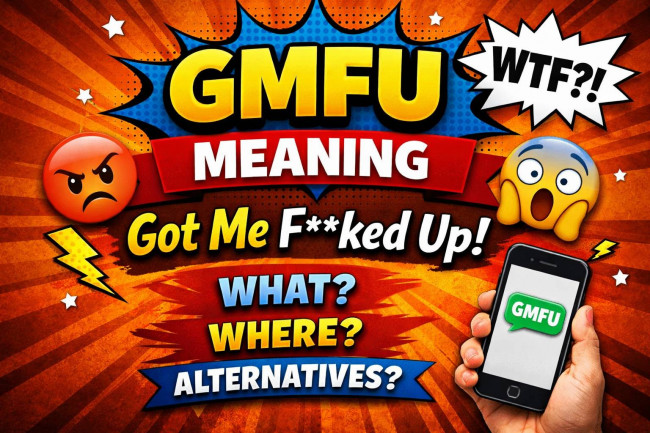
GMFU is short for “Got Me F*cked Up.” Despite how intense it sounds, the phrase is rarely meant in a literal sense. Instead, it functions as an emotional reaction, expressing shock, disbelief, frustration, or a feeling of being underestimated.
When someone uses GMFU, they are essentially saying, “What you just said or did is so unreasonable that I can’t believe it.” The abbreviation allows users to communicate this feeling instantly, without explaining their emotions in long sentences.
Why GMFU Carries So Much Emotional Impact
GMFU isn’t just another slang term; it’s a compact emotional amplifier. Its impact comes from multiple layers:
1. Immediate Emotional Signal
At its core, GMFU functions as a lightning-fast indicator of emotional state. When someone types GMFU, they are signaling surprise, frustration, or disbelief instantly. Unlike longer explanations (“I can’t believe you did that”), GMFU communicates strong feelings in just four letters. This brevity makes it particularly powerful in fast-moving online conversations where timing matters.
2. Profanity as Emotional Fuel
The inclusion of a strong expletive in GMFU amplifies the emotional weight. Studies of online communication show that profanity, while socially restricted in certain contexts, triggers an immediate emotional response in readers. It conveys intensity and authenticity, making the speaker’s reaction feel raw and unfiltered. GMFU leverages this effect without requiring long explanations or a confrontational tone.
3. A Verbal Shield
Beyond expressing emotion, GMFU acts as a defense mechanism. When someone feels challenged, disrespected, or treated unfairly, typing GMFU is a way to assert boundaries quickly. It’s a signal to the other party: “I recognize what happened, and I am not taking it lightly.” In this way, GMFU serves as both an emotional release for the speaker and a subtle warning to the listener.
4. Public Visibility in Online Culture
The emotional impact of GMFU is amplified by the public nature of social media and online platforms. Unlike face-to-face interactions, online reactions are permanent and often visible to wider audiences. Typing GMFU in a comment or reply sends a clear emotional signal not only to the person involved but also to everyone observing. This transparency increases its perceived intensity and influence.
5. Shared Understanding in Digital Communities
GMFU carries emotional weight because it is widely recognized in meme culture, social media, and internet slang communities. Users instantly understand the context and intensity behind the term. This shared understanding creates a sense of solidarity and validation: when someone responds with GMFU, others recognize the strong emotional reaction, even without further explanation.
6. Combination of Shock, Frustration, and Disbelief
Unlike lighter expressions such as “WTF” or “Ain’t no way,” GMFU often implies personal affront. It’s not merely a surprise it’s an acknowledgment that the speaker’s expectations or boundaries have been violated. This layered meaning makes GMFU more emotionally charged and contextually precise.
7. Cultural Reinforcement Through Memes and Social Media
Over time, the repeated use of GMFU in memes, viral posts, and reaction videos has reinforced its emotional potency. When users see GMFU in highly relatable or exaggerated situations, they internalize both the humor and the intensity, which further heightens its impact when used personally.
In short, GMFU works because it’s immediate, authentic, and culturally understood. It combines brevity, profanity, and emotional clarity to create a reaction that is both personal and universally recognized in digital spaces. Its power lies not in the words themselves, but in the unspoken intensity they carry, signaling shock, disbelief, or offense in a single, unmistakable shorthand.
Are There Other Meanings of GMFU?
While GMFU overwhelmingly stands for “Got Me F*cked Up,” internet users occasionally attempt to reinterpret it in cleaner or humorous ways. Phrases like “Got Me Feeling Unusual” or “Got Me Feeling Upset” sometimes appear in lighthearted contexts, especially when users want to avoid profanity or censor themselves.
However, these alternate meanings are not widely recognized and are usually context-dependent jokes rather than accepted definitions. Slang dictionaries, social media usage, and meme culture consistently reinforce the original meaning. As a result, when GMFU appears in a message, most readers automatically interpret it as the profane slang expression regardless of intention.
For clarity, writers and creators should assume the slang meaning will be understood unless explicitly stated otherwise.
Where Is GMFU Commonly Used?
GMFU is primarily used in informal digital spaces where emotional expression is valued over politeness. In text messages between friends, it often appears as a quick reaction to shocking or irritating news. On social media platforms like Twitter (X), Instagram, and TikTok, GMFU is commonly seen in replies, captions, and comments frequently paired with sarcasm or exaggeration.
Meme culture has amplified the popularity of GMFU. Screenshots of conversations, reaction images, and short-form videos often use the term to dramatize everyday frustrations, making it relatable to a wide audience. Because these environments encourage bold and expressive language, GMFU fits naturally into their communication style.
That said, GMFU is rarely used in long-form writing or professional communication, as its impact relies on immediacy and tone.
Real-World Proof: Where You Can See GMFU in Action
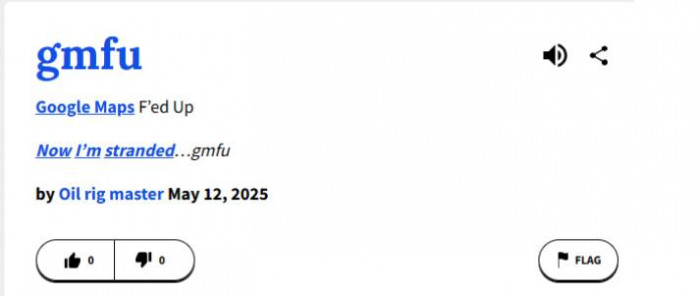
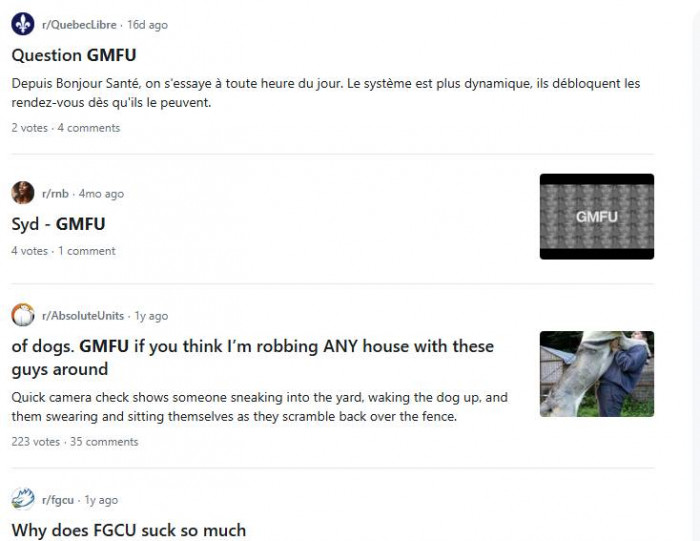
GMFU is not a niche or isolated term; it's actively used across major platforms.
● Urban Dictionary definition and examples:
● Reddit discussions and comments:
● TikTok hashtag examples:
https://www.tiktok.com/tag/gmfu
These sources demonstrate how GMFU appears naturally in everyday digital communication.
Is GMFU Considered Rude or Offensive?
GMFU contains explicit language, which automatically places it in the informal and potentially offensive category. In professional settings, academic writing, customer communication, or conversations with unfamiliar audiences, using GMFU can be perceived as disrespectful or inappropriate.
However, intent and context matter. Among close friends or within online communities that embrace slang culture, GMFU is often interpreted as expressive rather than hostile. It is less about literal meaning and more about emotional release.
Ultimately, whether GMFU is offensive depends on who is speaking, who is listening, and where the conversation is happening.
Alternatives to GMFU (When You Want to Sound Cleaner)
| Alternative Phrase | Tone | Best Used In | Meaning & Context |
| That’s unbelievable | Neutral | Casual & semi-formal | Expresses shock without sounding aggressive |
| You’ve got to be kidding me | Casual | Friendly conversations | Shows disbelief, often with humor |
| That’s unreasonable | Professional | Workplace, formal chats | Indicates disagreement in a respectful way |
| I strongly disagree | Formal | Professional discussions | Clear opposition without emotional charge |
| Ain’t no way | Slang | Social media, texting | Casual disbelief, lighter than GMFU |
| WTF | Informal | Close friends, memes | Shock or confusion, still contains profanity |
| That caught me off guard | Polite | Emails, public content | Softer expression of surprise |
| This doesn’t make sense | Neutral | Everyday conversation | Questions logic without emotional intensity |
How GMFU Compares to Similar Slang
GMFU belongs to a broader group of reaction-based slang terms, but it stands out because of its emotional force. While expressions like “WTF” or “Ain’t no way” indicate shock, GMFU often carries a stronger sense of personal offense or disbelief.
Unlike lighter slang, GMFU feels confrontational. It implies that the speaker believes a boundary has been crossed or an assumption has been made unfairly. This is why it is often used in clapbacks, arguments, or moments of strong emotional response, rather than casual surprise.
FAQs About GMFU
1. Can GMFU be used jokingly?
Yes, especially in memes or playful conversations where exaggeration is part of the humor.
2. Is GMFU mostly used by younger generations?
It is most common among Gen Z and Millennials, though anyone familiar with internet slang may use it.
3. Does GMFU always express anger?
Not necessarily. It can also convey shock, sarcasm, or disbelief, depending on the situation.
4. Is it okay to use GMFU in captions or comments?
It’s common in casual online spaces, but creators should consider their audience before using it publicly.
5. Is GMFU used more in speaking or writing?
GMFU is far more common in written digital communication than in spoken language.
6. Can GMFU be misunderstood?
Yes. Because of its strong tone, it can escalate conversations if the recipient takes it personally.
7. Is GMFU censored on social media?
Some platforms may limit visibility or flag content if the full phrase is spelled out rather than abbreviated.
8. Does GMFU appear in pop culture or music?
Yes, it occasionally appears in lyrics, captions, and viral content reflecting modern slang trends.
9. Should content creators avoid GMFU?
Creators targeting a general or professional audience should use it cautiously or provide context.
Conclusion
GMFU is a clear example of how modern slang prioritizes emotion over explanation. It captures disbelief, frustration, and shock in just four letters, making it a powerful but context-sensitive expression.
While it works well in casual and expressive environments, understanding when not to use GMFU is just as important as knowing what it means. Like much of internet language, its impact depends entirely on audience, tone, and timing.





Comments