
The term “Doge HHS migrant housing contract” has gained attention online, often creating confusion and mixed interpretations. Despite the name, it has nothing to do with cryptocurrency. Instead, it refers to a U.S. Department of Health and Human Services (HHS) migrant housing contract that was later questioned for its cost and oversight.
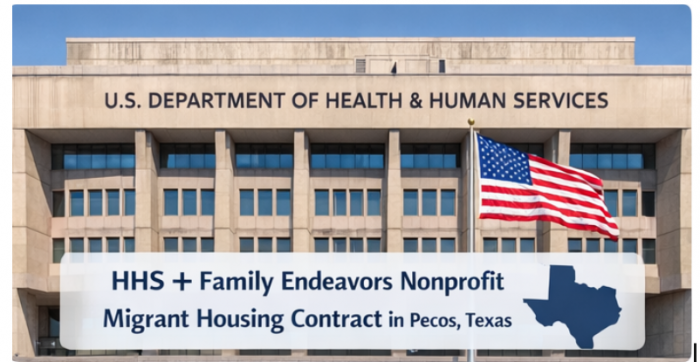
This article explains what the contract was, why it became controversial, and what it reveals about migrant housing, government spending, and accountability.
What Does “DOGE” Mean in This Context?
First, it is important to clear up confusion. DOGE does not refer to Dogecoin or any cryptocurrency.
In this case, DOGE is a shorthand term used to describe a government oversight and efficiency effort focused on identifying wasteful federal spending. The initiative gained public attention for reviewing large government contracts and publicly questioning whether taxpayer money was being used effectively.
DOGE does not manage migrant shelters, create immigration policy, or operate housing facilities. Its role is limited to reviewing spending and raising concerns about government contracts.
What Was the HHS Migrant Housing Contract?
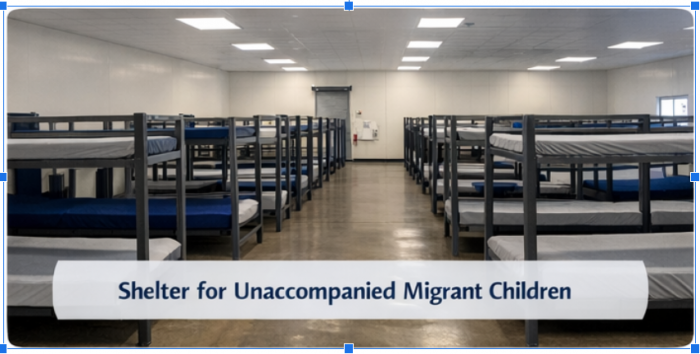
The contract at the center of this discussion was between HHS and a nonprofit organization tasked with operating a large migrant housing facility in Texas. The facility was designed to house unaccompanied migrant children, meaning minors who entered the United States without a parent or legal guardian.
HHS oversees these children through its Office of Refugee Resettlement (ORR). The goal of such facilities is to provide temporary care while children are screened, protected, and eventually reunited with family members or approved sponsors.
Why Was the Facility Created?
During periods of increased migration at the U.S. border, the government often needs emergency housing capacity. Large shelters are sometimes established so the system can respond quickly when arrivals surge.
The Texas facility was meant to:
● Be operational on short notice
● Provide beds, food, medical care, and supervision
● Prevent overcrowding in border facilities
● Ensure children were not left in unsafe or unsuitable conditions
Preparedness, not constant full occupancy, was the original justification for the contract.
What Services Was the Contractor Required to Provide?
Under the HHS agreement, the nonprofit operator was required to maintain a wide range of services, including:
● 24/7 staffing and security
● Daily meals and clean drinking water
● Medical and mental health care
● Sanitation and hygiene facilities
● Education and recreational activities
● Child safety monitoring and background-checked staff
● Compliance with federal child welfare standards
Even when the shelter was empty or lightly used, these services had to remain available to meet emergency-readiness requirements.
Why Did the Contract Become Controversial?
The controversy arose when DOGE highlighted that:
● The facility was reportedly mostly empty for long periods
● The federal government was paying approximately $18 million per month
● Costs continued despite low or zero occupancy
Critics argued that while preparedness is important, the expense appeared excessive. Questions were raised about whether the same level of readiness could have been maintained at a lower cost or through alternative housing models.
Another concern was that the contract was reportedly sole-source, meaning it was not competitively bid. This increased scrutiny around transparency and accountability.
How Did HHS Respond?
After public attention and internal review, HHS terminated the contract. Officials stated that the decision was part of broader efforts to reassess spending, improve efficiency, and adapt to changing migration patterns.
The termination did not mean migrant housing was no longer needed. Instead, it reflected a shift toward:
● Smaller shelters
● Family-based placements
● More flexible housing options
● Stronger cost controls
What Did the Nonprofit Operator Say?
The nonprofit organization involved defended its actions, stating that:
● It fully complied with all contract terms
● Staffing, security, food services, and medical care had to be maintained at all times
● The facility had previously housed tens of thousands of children during migration surges
From the organization’s perspective, payments reflected the real costs of emergency preparedness rather than misuse of funds.
Concerns Raised by Advocates and Communities
In addition to cost concerns, advocacy groups and local residents raised broader questions, such as:
● Whether large-scale emergency shelters are the best environment for children
● The emotional and mental health impact of institutional housing
● Transparency in how federal funds are monitored
● Privacy and protection of children’s personal data
● The effect of large facilities on local infrastructure and services
These concerns contributed to calls for more child-centered and community-based alternatives.
Steps Taken After the Contract Review
Following the controversy, several steps were emphasized:
● Greater oversight of large federal housing contracts
● Increased focus on cost-efficiency
● Preference for smaller, less institutional housing models
● Continued inspections and monitoring of shelters
● Ongoing evaluation of emergency readiness strategies
While these steps do not solve every challenge, they represent an effort to improve future decision-making.
What This Situation Does Not Mean
It is equally important to understand what this case does not prove:
● It does not mean migrant shelters are unnecessary
● It does not automatically indicate corruption
● It does not suggest children should be left without care
● It is not related to cryptocurrency or financial speculation
Instead, it highlights how complex and sensitive migrant care funding can be.
The Bigger Picture: Migrant Housing in the United States
The Doge HHS migrant housing contract reflects a larger national challenge:
● Balancing humanitarian responsibility with taxpayer accountability
● Preparing for migration surges without long-term waste
● Protecting vulnerable children while ensuring transparency
Public scrutiny, audits, and informed discussion play an important role in shaping better policies.
Final Thoughts
The Doge HHS migrant housing contract became controversial not because providing shelter is wrong, but because how government-funded programs are managed truly matters. Safe housing for migrant children is essential, but it must be paired with careful planning, realistic budgeting, and strong oversight.
For readers seeking clarity, the key takeaway is simple: this case serves as a lesson in balancing emergency preparedness with responsible spending. Understanding these issues helps the public engage more thoughtfully with immigration and humanitarian policy discussions.









Comments