
What actually happens when you write
The real difference shows up the moment you start typing.
With Grammarly, the experience is immediate. You write a sentence, and within seconds, it underlines issues. Corrections appear inline. You click, and the sentence is fixed. There is almost no interruption. The tool stays out of your way.
This makes Grammarly feel invisible. It behaves like an extension of your typing rather than a system you actively engage with.
With ProWritingAid, the workflow is different. You write first, then analyze. The tool generates reports such as readability, sentence structure, overused words, pacing, and style. You move through these reports one by one, often revising sections in batches.
This creates friction, but it is intentional. ProWritingAid is not trying to fix your sentence instantly. It is trying to make you examine it.
The result is a clear divide:
Grammarly offers passive help.
ProWritingAid demands active effort.
That distinction shapes everything else.
Depth of feedback: surface fixes vs structural insight
This is where most comparisons become shallow, but it is the core difference.
Grammarly focuses on grammar, clarity, and tone. It is very good at catching mistakes quickly. It improves sentence readability and helps avoid awkward phrasing. Its tone suggestions are useful for emails and professional writing.
But its feedback rarely goes beyond the sentence level. It tells you something is wrong, but it does not push you to understand the underlying pattern.
ProWritingAid operates at a deeper level. It analyzes writing across multiple dimensions:
- Sentence variety and rhythm
- Repetition and overused words
- Readability and pacing
- Structural consistency across paragraphs
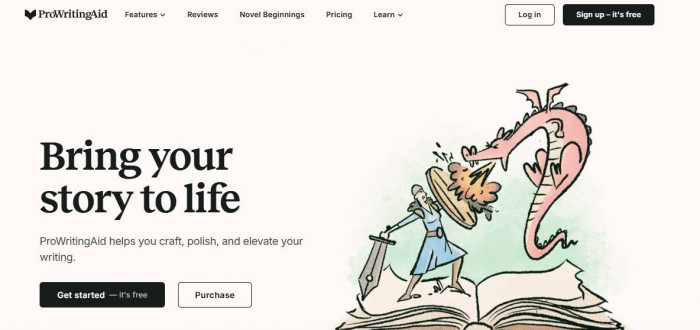
Instead of just flagging an issue, it often shows patterns. For example, it might highlight that you rely too heavily on short sentences or repeat certain words across sections.
The difference can be summarized simply:
Grammarly tells you what is wrong.
ProWritingAid tries to show why it is wrong.
That difference determines whether your writing changes over time.
Learning vs dependency
This is the most important distinction, and it is often ignored.
Grammarly makes writing easier. That is its strength. But ease comes with a trade-off. Because corrections are instant and require little thought, users tend to rely on them. Over time, they may not internalize the rules or patterns being corrected.
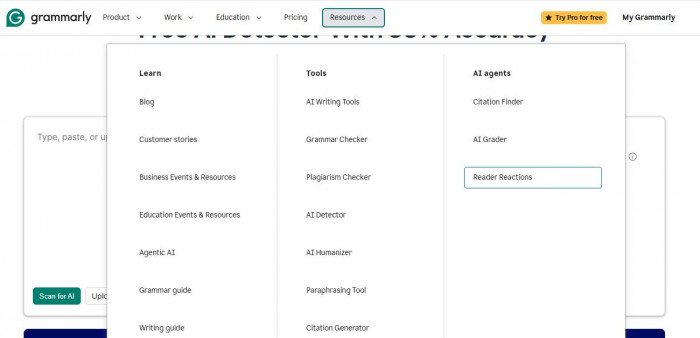
You fix the sentence, but you do not necessarily learn from it.
ProWritingAid slows you down. It forces you to engage with your writing. You have to review reports, interpret feedback, and decide what to change. This process builds awareness.
It is not automatic. Many users ignore the reports or feel overwhelmed. But when used properly, it creates a feedback loop that improves writing skills over time.
The reality is clear:
Grammarly builds dependency.
ProWritingAid builds skill, but only if you invest the effort.
Pricing breakdown
| Tool | Free Plan | Monthly | Yearly | Special |
| Grammarly | Yes | ~ $12/month | ~ $144/year | Business plans higher |
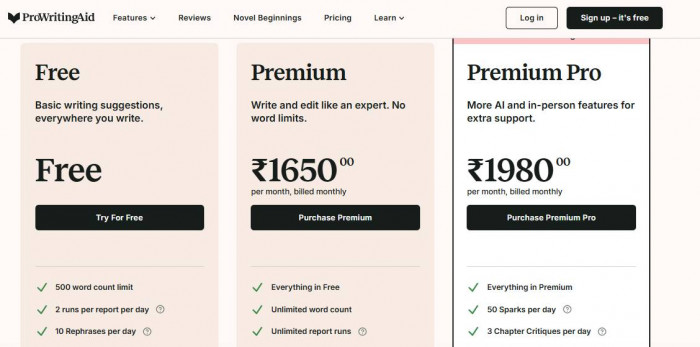
| ProWritingAid | Yes | ~ $10–$12/month | ~ $79/year | Lifetime deal available |
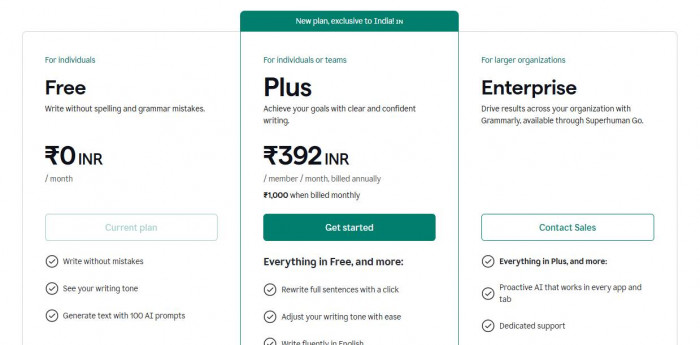
Grammarly’s pricing becomes noticeably higher when used across teams or for long-term subscriptions. Its business plans increase costs significantly for organizations.
ProWritingAid is more aggressive on pricing. The yearly plan is cheaper, and the lifetime deal makes it a one-time investment for long-term users.
So what?
If you are using a writing tool daily for years, ProWritingAid is financially more efficient. Grammarly is easier to start with, but it becomes expensive at scale.
Ratings snapshot with context
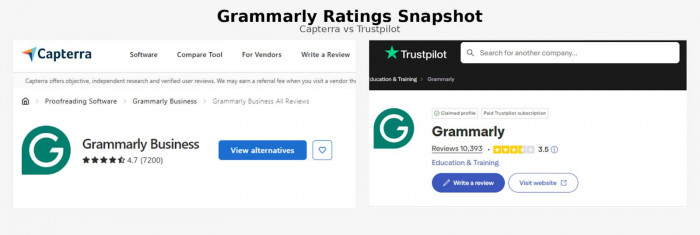
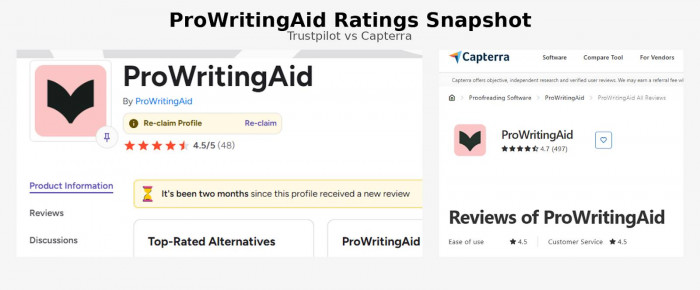
| Platform | Grammarly | ProWritingAid |
| G2 | ~4.7 | ~4.5 |
| Capterra | ~4.7 | ~4.7 |
| Trustpilot | ~3.5 | ~4.6 |
On the surface, both tools perform similarly.
The difference lies in why users rate them the way they do.
Grammarly scores high for ease of use and reliability. It loses points primarily on pricing and occasional overcorrection.
ProWritingAid scores well for depth and value. It loses points on usability, especially for new users who find the interface and reports overwhelming.
This reflects the same pattern seen in workflow and learning.
Speed vs control
This is not a minor difference. It is a workflow decision.
Grammarly is fast. It integrates into browsers, email clients, and documents seamlessly. You write, it corrects, and you move on. There is no need to switch contexts.
ProWritingAid is slower. It requires deliberate review. You often step away from writing to analyze reports and revise sections.
Speed comes with less control.
Control comes with time investment.
So what?
If your work depends on quick output, Grammarly fits naturally. If your goal is to refine writing quality over time, ProWritingAid provides more control.
Where each tool fails
Grammarly has clear limitations. It tends to simplify writing too aggressively. This can flatten tone, especially in creative or nuanced content. It is also weak when handling long-form structure such as essays, articles, or books. It operates mostly at the sentence level.
ProWritingAid has a different set of problems. Its reports can feel overwhelming. New users often struggle to know which suggestions matter. The analysis process slows down writing, which can disrupt momentum. It is not beginner-friendly.
These are not small issues. They directly impact usability.
Practical use-case decisions
The right choice depends less on features and more on how you write.
Students and casual writers benefit from Grammarly. It reduces errors quickly and does not require a learning curve.
Bloggers and long-form writers gain more from ProWritingAid. The structural feedback and style analysis are more relevant for extended content.
Professionals sit in between. If speed matters, Grammarly is the safer choice. If writing quality is part of the job, ProWritingAid becomes more valuable.
This is not about preference. It is about matching the tool to the workflow.
Final verdict: forced decision
If you had to rely on only one tool, the answer depends on what you want from your writing.
Grammarly wins for speed and everyday writing. It keeps your content clean, readable, and error-free with minimal effort.
ProWritingAid wins for long-term improvement. It forces you to engage with your writing and helps build awareness of patterns, structure, and style.
The key point is this:
Grammarly helps you write correctly.
ProWritingAid helps you write better, but only if you are willing to slow down and learn.
They are not substitutes. They operate at different levels of writing maturity.





Comments