
Quick comparison snapshot
| Tool | Starting Price | Rating (G2 / Capterra) | Best For |
| Jasper | $59/month | 4.7 / 4.8 | Brand-controlled marketing content |
| Writesonic | $49/month | 4.7 / 4.8 | SEO and multi-format content operations |
| Rytr | $7.50/month annually | 4.7 / 4.0 | Budget-conscious solo users |
| Anyword | $39/month | 4.8 / 4.8 | Performance marketing and ad copy |
| Scalenut | $59/month | 4.7 / 4.8 | SEO-led long-form content |
Jasper is the strongest all-round upgrade if Copy.ai feels too loose
Jasper is the closest thing to a premium replacement for users who want Copy.ai to write with more discipline. Its pricing is materially higher, with Pro starting at $59 per month on annual billing and a custom Business tier above that, so this is not the “cheap alternative” answer. But Jasper is usually better when content has to sound intentional instead of merely generated. Its public positioning is now very clearly built around marketing teams, brand voice management, and coordinated campaign production rather than prompt-based convenience alone.
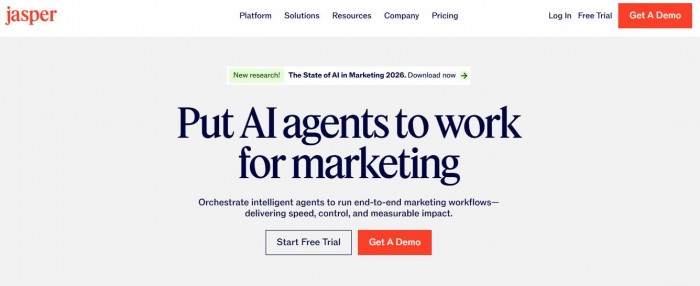
What Jasper does better than Copy.ai is consistency. That matters more than feature count. If you are drafting landing pages, nurture emails, ad sets, and blog content under one brand system, Jasper is less likely to give you the abrupt tonal drift that makes many Copy.ai outputs feel assembled instead of written. The review data supports that reputation. Jasper’s rating footprint is unusually strong, with 4.7 on G2 and 4.8 on Capterra from a very large review base. That kind of scale matters because high scores are more convincing when they are backed by thousands of users rather than a few dozen. (Jasper)
Jasper is weaker in one obvious way: it is not the best value if you only need lightweight copy generation. Paying nearly $60 per month makes sense when brand control and content quality affect revenue. It makes less sense when your work is mostly simple social captions, basic product descriptions, or rough ideation. In other words, Jasper beats Copy.ai on quality and control, but not on accessibility for casual users.
Writesonic makes more sense when your content stack is tied to SEO and publishing
Writesonic has evolved into something broader than an AI copywriter. Its pricing page is now built around article generation, SEO workflows, AI search visibility, audits, and broader publishing support. The Lite plan starts at $49 per month, and the Standard plan starts at $79 per month on annual billing, placing it in a similar serious-use bracket rather than the bargain end of the market. That makes it one of the most credible Copy.ai alternatives for content teams that publish frequently and care about search performance, not just drafting speed.
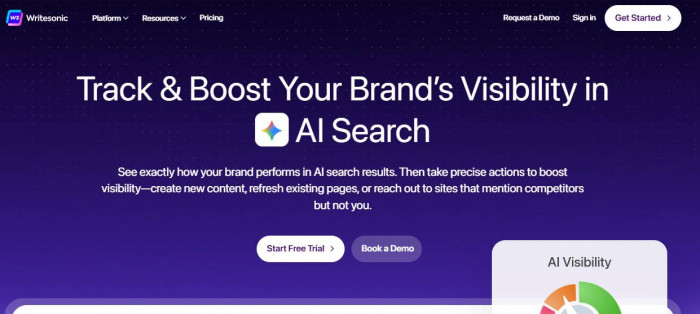
This is where Writesonic often beats Copy.ai in practical use. Copy.ai can help generate content, but Writesonic is better when content has to move through a fuller workflow that includes topic development, SEO structure, article drafting, and iterative optimization. That is why it tends to suit content-led growth teams better than Copy.ai’s current GTM-heavy positioning. The review base is also excellent: 4.7 on G2 and 4.8 on Capterra, with more than two thousand reviews on each platform. That is one of the strongest trust signals in this category. (Writesonic)
Where Writesonic is weaker is in editorial sharpness. It can feel broader than it is deep. If Jasper feels like a more deliberate marketing writing system, Writesonic feels like a larger operational toolkit. That is a strength for SEO and publishing teams, but it also means some users will find it less focused if their only job is writing polished sales or brand copy. Writesonic is better than Copy.ai for content operations. It is not automatically better for every kind of writing.
Rytr is the budget answer, but only if you understand the compromise
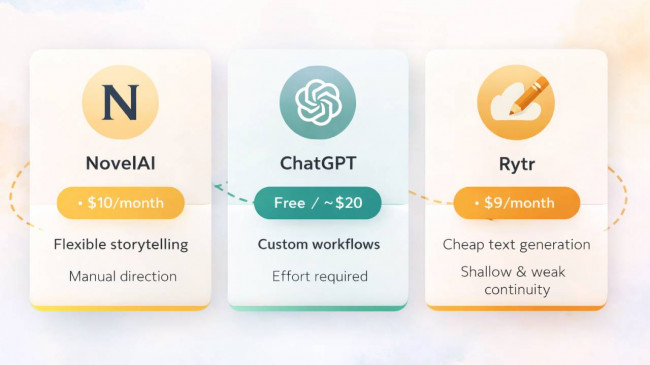
Rytr remains one of the cheapest serious alternatives in this space. Its official pricing page lists a free plan and an Unlimited plan at $7.50 per month, while G2 pricing data also shows paid tiers including $9 per month Saver and $29 per month Unlimited in some plan displays. Even allowing for display differences across sources, the key point is clear: Rytr sits far below Jasper, Writesonic, or Copy.ai on entry cost.
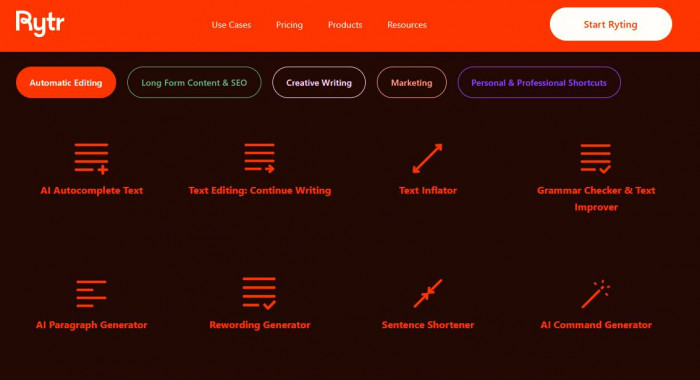
That price gap explains why Rytr still attracts solo users, freelancers, and small operators who mainly need quick drafts without much financial commitment. It does some things better than Copy.ai simply by being easier to justify. If your complaint about Copy.ai is that the paid plans feel expensive relative to draft quality, Rytr looks attractive immediately. G2 still gives it 4.7, which is a strong number. (Rytr)
But Rytr is not a hidden Jasper. Its weakness is ceiling, not value. It is good enough for short-form content, brainstorming, basic web copy, and rough outlines. It is less convincing when you need sophisticated long-form flow, stronger brand fidelity, or content that survives review with minimal rewriting. The trust data reflects some of that caution. G2 is strong, but Capterra shows a much thinner and weaker visible footprint at 4.0 from 10 reviews. That does not make Rytr bad. It simply means the confidence level is lower than with Jasper or Writesonic.
A short way to think about it: Rytr is better than Copy.ai if your biggest issue is cost. It is not better if your biggest issue is content quality.
Anyword is what Copy.ai should feel like for performance marketers
Anyword is the most specialized tool in this lineup. It is not trying to be the best all-purpose writer. It is trying to be the best option when writing is directly tied to marketing performance. Its public pricing starts at $39 per month for Starter and $79 for Data-Driven, with stronger prediction and optimization layers on higher plans. Capterra describes it as a performance-writing platform used by over one million marketers, and the vendor claims an average 30 percent lift in performance. That lift figure is vendor-reported, so it should be treated as a directional claim rather than a neutral benchmark, but it still explains the product’s positioning.
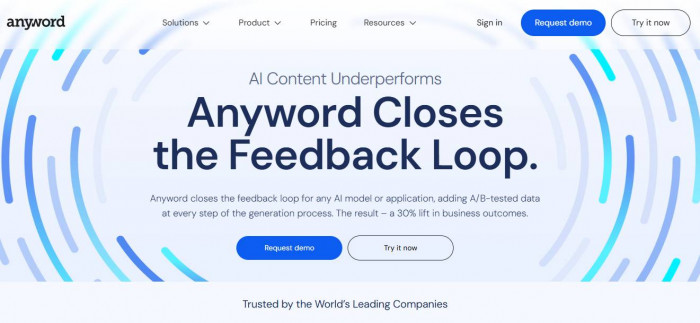
What Anyword does better than Copy.ai is clear prioritization. Copy.ai tries to cover many GTM tasks. Anyword is more focused on message performance, predictive scoring, and writing that is built to convert rather than simply exist. For marketers writing ads, email subject lines, product messaging, and campaign copy, that specialization often creates better ROI than a broader AI writing tool. Its review profile is also excellent, with 4.8 on G2 and 4.8 on Capterra. Those are elite scores in a competitive category. (Anyword)
The downside is just as obvious. Anyword is not the tool to buy if you mostly want long blog posts or broad content operations. It is also not the cheapest option. If your work is more editorial than performance-driven, Jasper or Writesonic usually makes more sense. But if Copy.ai feels too generic for revenue-focused marketers, Anyword is one of the clearest upgrades available.
Scalenut is stronger when your real problem is ranking, not writing
Scalenut belongs on this list because a lot of people searching for “Copy.ai alternatives” are not actually looking for another general AI writer. They are looking for a tool that helps them publish search-driven content with more structure and less chaos. That is Scalenut’s lane. Its official pricing page positions it as an AI visibility and execution platform, and G2 pricing currently shows Starter at $59 and at $89 per month.

What Scalenut does better than Copy.ai is combine writing with SEO-led planning and optimization. That makes it especially useful for teams whose content strategy lives or dies by organic search performance. Copy.ai can help generate article drafts, but it is not as naturally oriented around the full SEO content cycle. If Copy.ai feels too shallow in long-form structure, Scalenut usually feels more grounded because it is trying to solve a narrower and more practical problem. (Scalenut)
Its ratings are also strong. Capterra shows 4.8 from 397 reviews, and G2 pricing pages point to a 4.7-level reputation. That does not make it the best writer in this list. It probably is not. Jasper is still stronger for brand-heavy marketing writing. But for SEO-centric teams, Scalenut can deliver more useful output per draft because it is better aligned with how the content will actually be used.
Scalenut’s weakness is that it can feel narrower than Jasper or Writesonic if your work extends far beyond SEO content. It is not the best replacement for every Copy.ai user. It is the best replacement for the user whose dissatisfaction with Copy.ai is really dissatisfaction with unstructured long-form workflows.
Data comparison: price, value, and output quality
| Tool | Price Value | Output Quality | Best Use Case |
| Jasper | Expensive, but justified for teams with real brand and campaign needs | High | Serious marketing teams |
| Writesonic | Strong value for teams doing SEO plus multi-format publishing | High for search-led work | Content operations and SEO |
| Rytr | Best raw affordability | Medium | Solo users and small budgets |
| Anyword | Expensive if judged by words, strong value if judged by campaign performance | High for conversion copy | Marketers and paid teams |
| Scalenut | Fair value for SEO-first teams | High for structured search content | Ranking-focused content programs |
This is where Copy.ai’s problem becomes clearer. It is not always overpriced in isolation. The issue is relative value. At $49 for Starter and $249 for Advanced, Copy.ai often makes less sense than a more specialized tool unless you specifically want its workflow-based GTM model. Jasper gives better writing discipline, Writesonic gives broader content operations value, Rytr gives cheaper access, Anyword gives stronger performance focus, and Scalenut gives better SEO structure.
Final verdict
Best overall alternative: Jasper. It is the cleanest answer for users who want something meaningfully better than Copy.ai rather than merely cheaper. The pricing is higher, but the improvement in consistency, brand control, and overall writing reliability makes it the strongest all-round upgrade.
Best for beginners: Rytr. Not because it is the best tool here, but because it is the easiest low-risk starting point financially. If someone is moving off Copy.ai and wants to spend as little as possible while still getting workable output, Rytr is the obvious entry choice.
Best for marketers: Anyword. If the work is paid acquisition, conversion-focused messaging, email performance, or ad copy testing, Anyword is better aligned to the job than Copy.ai. It is more specialized, and that specialization is exactly why it wins this category.
Best budget option: Rytr, with Simplified absent here only because this shortlist stayed focused on the strongest direct Copy.ai writing alternatives. Rytr wins on price alone, but that win comes with a lower quality ceiling.
The blunt version is this: if Copy.ai feels too broad and not sharp enough, switch to Jasper. If you run a content machine tied to search, switch to Writesonic or Scalenut. If your job is performance copy, switch to Anyword. If money is the problem, switch to Rytr and accept the trade-off. Copy.ai is still relevant, but for many users it has drifted away from being the best pure writing choice. That is why this market now rewards specialists more than generalists.





Comments