
In 2026, creating content is easier than ever. AI tools can generate blog posts, videos, captions, and even newsletters in minutes. But here is the hard truth: content alone does not make money.
Traffic without conversions is just vanity. Views without strategy do not build businesses.
The creators and brands winning today are not the ones posting the most. They are the ones designing content with a clear revenue path. Every article, video, or post has a purpose. It guides the audience toward a specific action that leads to income.
Let us break down how this works in a practical and beginner friendly way.
How Content Funnels Work in 2026
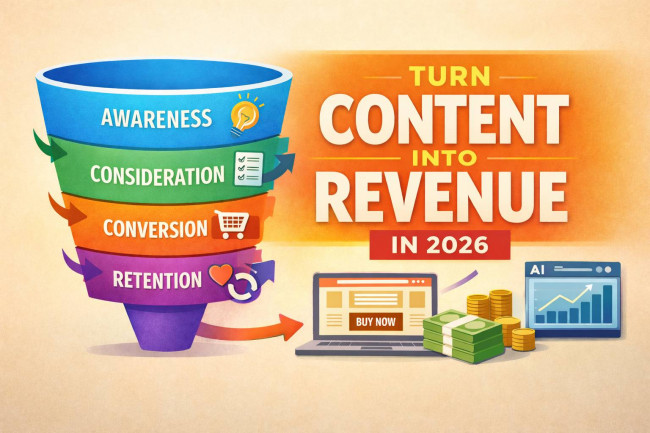
A content funnel is simply a journey. It turns strangers into buyers step by step.
In the past, funnels were complicated with dozens of tools. In 2026, they are simpler but smarter. The difference is intentional design. You do not create random content. You create connected content.
A modern funnel usually includes:
- Awareness content that attracts new people
- Trust building content that educates and proves authority
- Conversion content that presents a clear offer
- Retention content that increases repeat purchases
Instead of focusing only on traffic, successful creators focus on movement. Every piece of content should answer one question:
What is the next action I want the reader to take?
For example:
- A blog post leads to a free guide
- The guide leads to an email sequence
- The email sequence promotes a paid product
That is how content becomes a revenue engine.
Mapping Content to the Buyer Journey
Not all readers are ready to buy. Some are just learning. Others are comparing options. Some are ready to pay.
Your content must match their mindset.
Awareness Stage
This is where people discover you for the first time. They are searching for answers, not products.
Examples include:
1. How to guides
2. Educational videos
3. Beginner friendly tutorials
4. Social media tips
At this stage, your goal is simple: help first.
Revenue connection at this stage can include:
1. Offering a free ebook or checklist
2. Encouraging newsletter signups
3. Adding relevant affiliate links naturally
You are building attention and trust.
Consideration Stage
Now your audience knows you. They are comparing tools, services, or solutions.
This is where content becomes more strategic. You can create:
1. Product comparisons
2. Case studies
3. Real world examples
4. Detailed reviews
5. Behind the scenes breakdowns
Here, revenue becomes more direct. You can:
1. Promote affiliate tools
2. Offer strategy calls
3. Share demo videos
4. Invite people to webinars
Trust turns into intent at this stage.
Conversion Stage
This is where decisions happen.
Your audience is no longer asking “what is this?” They are asking “should I buy?”
Content here should be clear and confident. Examples include:
1. Sales pages
2. Launch emails
3. Testimonials
4. Detailed product walkthroughs
Strong conversion content includes:
1. Clear benefits
2. Social proof
3. Specific results
4. Simple call to action
Never assume people know what to do next. Tell them clearly.
Monetization Models That Actually Work in 2026
Content without a monetization model is just publishing. You must connect your content to a system that generates income.
Here are the most effective models right now.
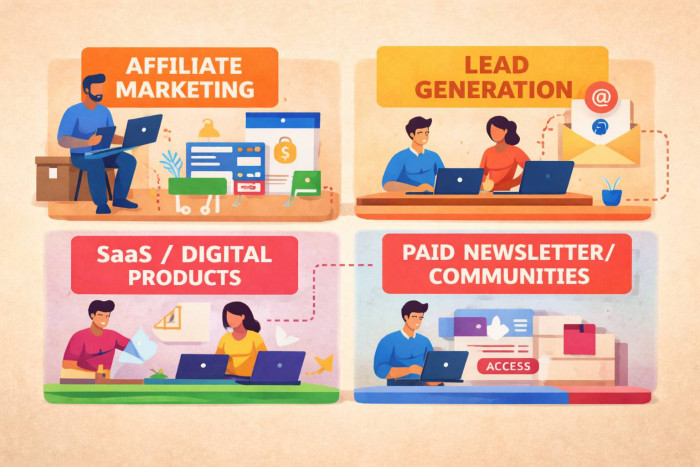
1. Affiliate Marketing
You recommend products and earn a commission when someone buys through your link.
This works well for:
1. Bloggers
2. Review creators
3. Niche YouTubers
4. Newsletter writers
Why it works:
1. No need to create your own product
2. Can generate recurring income
3. Easy to integrate into educational content
Example:
A creator writes detailed AI tool comparisons. Each article includes affiliate links. Over time, organic traffic generates consistent monthly commissions.
2. Lead Generation
Instead of selling immediately, you collect emails and nurture your audience.
This model is powerful because email is still one of the highest converting channels.
Best for:
1. Agencies
2. Consultants
3. Coaches
4. Service providers
You can use:
1. Free templates
2. Mini courses
3. Exclusive guides
4. Webinars
Example:
A marketing consultant offers a free growth checklist. Subscribers receive a 5 day email sequence that promotes paid consulting services.
3. SaaS or Digital Products
If you have your own software, app, or course, content becomes your main acquisition channel.
This works especially well with:
1. SEO blog content
2. YouTube tutorials
3. Educational newsletters
Example:
A founder builds a productivity app. Their blog ranks for productivity tips. Each article naturally introduces the app as the solution.
Content becomes the top of the funnel for subscription revenue.
4. Paid Newsletters and Communities
In 2026, niche communities are growing faster than public social media.
Writers and creators are monetizing through:
1. Paid newsletters
2. Private memberships
3. Discord or community groups
4. Exclusive research access
This model works best when:
1. You serve a specific niche
2. You offer unique insights
3. You build strong personal trust
Example:
A finance writer shares free weekly insights publicly but offers deeper analysis inside a paid community.
Using AI and Analytics to Track Content ROI
Guessing does not work anymore. You need data.
AI tools now help track:
1. Which content drives clicks
2. Which emails convert
3. Which blog posts generate revenue
4. Where users drop off
Instead of measuring only views, measure:
1. Email signups
2. Click through rates
3. Conversion rates
4. Revenue per article
5. Customer lifetime value
AI can now:
1. Predict high performing topics
2. Optimize headlines
3. Suggest better calls to action
4. Identify buyer intent
For example, if one blog post generates 70 percent of your email signups, AI analytics will highlight that pattern. You can then create similar content to scale revenue.
Data turns content into strategy.
Real Examples of Content That Drives Revenue
Let us look at practical examples.
Example 1: Tool Comparison Blog
A creator writes detailed comparisons of business tools. Each post includes affiliate links and clear recommendations. Over time, search traffic turns into consistent commission income.
Example 2: Educational YouTube Channel
A YouTuber teaches design skills. In every video, they mention their paid course. The content builds trust, and the course becomes the natural next step.
Example 3: Newsletter Based Funnel
A founder shares weekly startup tips on social media. Readers join a free newsletter. After delivering value for weeks, the founder launches a paid mastermind group.
In all these examples, content is directly connected to an offer.
Common Mistakes Creators Make
Many people struggle with monetization because they focus only on visibility.
Common mistakes include:
1. Creating content without a clear goal
2. Not collecting emails
3. Promoting too many unrelated products
4. Ignoring analytics
5. Trying to sell too early without building trust
6. Not having a defined offer
Another big mistake is inconsistency. Revenue driven content systems require time. A single viral post rarely builds a sustainable income stream.
Consistency and strategy win.
Conclusion: Turning Content Into Income in 2026
In 2026, content is not about posting more. It is about connecting attention to action.
If you want to turn content into revenue, follow these simple steps:
1. Choose one clear monetization model
2. Build a simple content funnel
3. Match content to each stage of the buyer journey
4. Always include a clear next step
5. Track conversions, not just views
6. Improve based on data
When content is connected to a structured system, it stops being a hobby and starts becoming an asset.
You do not need advanced technical skills. You need clarity, consistency, and a revenue plan behind every piece of content.
That is how content becomes income in 2026.





Comments