
In early 2025, a surprising public policy story caught national attention: the Department of Government Efficiency (DOGE) an oversight initiative tied to the U.S. federal government terminated a high‑value contract with the Department of Health and Human Services (HHS) involving migrant housing that had reportedly been running for millions of taxpayer dollars despite having low occupancy or being empty. The story has since ignited debate across major political and social media platforms.
What Was the Contract? What Did It Aim to Do?
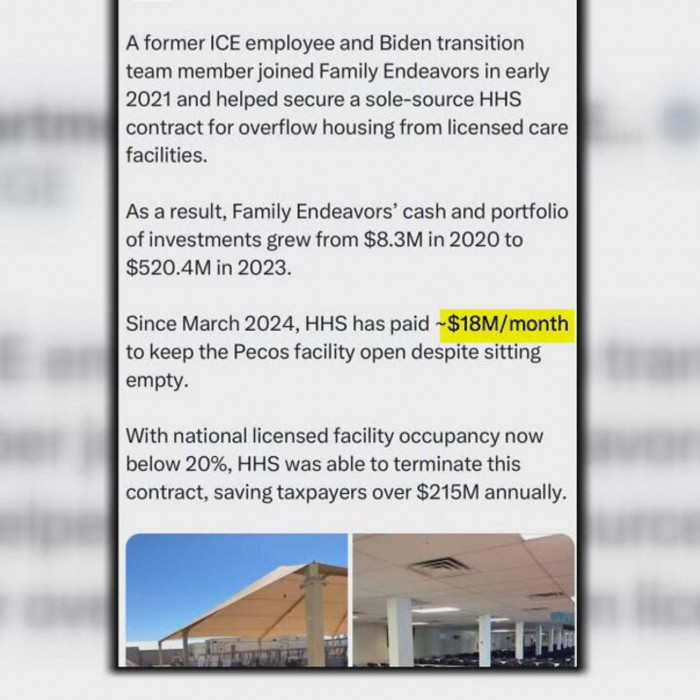
The contract in question was between HHS and Family Endeavors, a nonprofit group that operates shelters and support services for vulnerable populations. Under this agreement, the nonprofit was tasked with operating an “overflow housing facility” in Pecos, Texas, intended to provide emergency shelter and care for migrant families and unaccompanied minors.
HHS, through its Office of Refugee Resettlement, routinely contracts with external groups to provide shelter beds and services when traditional care networks are full, especially during surges at the U.S. southern border. These contracts are meant to address the humanitarian need for safe, licensed alternatives to detention centers.
According to published reports, since early 2024, HHS was paying roughly $18 million per month to Family Endeavors to run the Pecos facility even while the center reportedly had minimal or no occupancy. DOGE officials claimed that this spending continued despite licensed shelter occupancy being below 20% nationwide, leading to the decision to terminate the contract as an effort to save taxpayer money.
Timeline and Key Data
To make sense of how the situation unfolded, here’s a quick timeline with key facts:
| Date / Period | Event |
| 2021 | Family Endeavors receives a sole‑source contract from HHS to operate overflow migrant housing. |
| 2022–23 | Family Endeavors’ revenue and investment portfolio dramatically increase, prompting scrutiny. |
| March 2024 – Early 2025 | Reports suggest HHS continued paying up to $18M/month to keep the Pecos facility “open” despite low occupancy. |
| February 2025 | The Department of Government Efficiency (DOGE) announces the contract’s termination, citing waste. |
Monthly Spending on a Facility With Low Occupancy
Below is a simplified chart estimating the cumulative cost of payments of $18M/month continued for a year with limited usage:
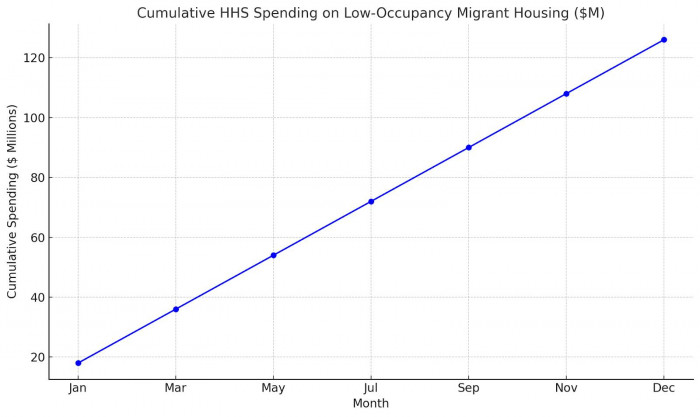
Note: This simplified visualization shows how rapidly costs can escalate ($18 million × 12 months = ~$216M). It does not include operating costs, staffing, utilities, transport, or other overheads.
Positive Perspectives: Efficiency and Accountability
Supporters of the DOGE decision argue that:
1. Taxpayer Savings
DOGE positioned the termination as a cost‑cutting measure pointing out that paying millions for an underutilized facility is inefficient. The elimination of the contract was pitched as saving taxpayers potentially hundreds of millions annually by reducing unnecessary expenditures.
2. Government Oversight
Some analysts laud the notion of aggressive oversight in a contracting environment historically beset by overspending, no‑bid awards, and limited transparency. Holding vendors accountable and reassessing contracts is standard in effective fiscal governance.
3. Reducing Waste
Where occupancy was low or negligible, continued high monthly payments could be deemed wasteful especially during a time of broader budgetary concerns across agencies.

Negative Perspectives and Critical Concerns
However, the situation isn’t simply black and white. Critics argue:
1. Lack of Competitive Bidding and Oversight
Investigations have highlighted that major contracts—one of which was worth hundreds of millions, were awarded as sole‑source contracts without open competition, which raises concerns about whether the government got the best value or properly vetted providers.
2. Rapid Growth, Limited Experience
According to some watchdog reporting, Family Endeavors experienced a dramatic increase in revenue after winning government contracts, despite limited prior experience providing large‑scale migrant accommodation services. Critics say this raises questions about procurement processes.
3. Political Weaponization
Opponents of the DOGE oversight model argue that decisions like contract termination could be politicized, applied inconsistently across agencies and programs, and might reflect broader political fights rather than purely administrative efficiency.
4. Impact on Migrant Services and Care
Some experts contend that cutting funding or abruptly ending contracts could disrupt services for vulnerable populations especially if transition plans aren’t well‑managed and if alternative housing capacity is insufficient.
Public Reaction and Broader Context
The public reaction to the DOGE–HHS contract cancellation has been mixed and highly polarized.
Some social media commentary criticized the payments as wasteful or emblematic of broader government mismanagement. Others worried that an oversimplified narrative ignores the complex humanitarian needs that such facilities were designed to meet.
Beyond this single contract, the broader context shows contracting for migrant services is a contentious issue nationwide, involving multiple governments, NGOs, and private providers. Various cities and states have faced similar scrutiny over no‑bid contracts, audit findings, and tensions around transparency and oversight. (amNewYork)
Balancing Efficiency and Humanitarian Needs
A central tension in this story is between fiscal responsibility and meeting human needs:
- Fiscal Responsibility: Ensuring that government funds are spent wisely, with proper oversight, and in ways that deliver value for money.
- Humanitarian Responsibility: Providing adequate, safe, and humane shelter for families and children who have often fled violence, poverty, or conflict, and who are awaiting legal processing or resettlement decisions.
These goals can sometimes clash especially under high demand, changing migrant flows, and political pressure.
Common Questions About the Contract
Was the Facility Actually Empty?
Reports indicate that periods of low occupancy did occur, prompting DOGE to label the facility as underutilized. However, occupancy levels can vary with migration patterns, referrals, and licensing requirements.
Did the Government Improperly Award the Contract?
Some watchdog investigations question whether the sole‑source nature of the contract and rapid scaling of Family Endeavors’ income was entirely appropriate or competitive.
Did the Termination Hurt Migrants?
At the time of contract termination, there was limited reporting on disruptions to migrant care—but any abrupt changes to housing arrangements could affect services, staffing, or local community coordination.
Lessons for Future Policy
This situation highlights a few broader lessons:
1. Transparency in Contracting
Federal contracting, particularly around sensitive areas like migrant care, needs to be transparent and competitive to ensure trust and good stewardship of public resources.
2. Data‑Driven Oversight
Contract evaluation should hinge on data about utilization, quality of care, and cost‑effectiveness, not solely expenditure amounts.
3. Human‑Centered Approaches
Policies that affect vulnerable populations require careful balancing of efficiency and compassion to ensure that services remain humane and equitable.
Conclusion
The DOGE– HHS migrant housing contract story is a symbol of broader issues in U.S. public administration:
- How do we ensure taxpayer money is spent wisely?
- How do we provide care and shelter for vulnerable people fairly and humanely?
- How should oversight bodies balance efficiency goals with humanitarian missions?
As this story continues to unfold in legal, political, and journalistic arenas, what remains clear is that contracting for essential services especially those involving children and families must be pursued with rigorous oversight, clear benchmarks, and transparent processes.










Comments