
The Biggest Gain: Reducing Writing and Thinking Time
The largest time drain in most workflows is not execution. It is thinking. Starting from scratch, structuring ideas, and figuring out what to say consumes more time than people realize.
Tools like ChatGPT and Claude directly replace that step.
Instead of building ideas manually, you start with a structured output. Emails, reports, summaries, drafts, and even code are generated instantly. This shifts your role from creator to editor.
That shift alone reduces cognitive load significantly. Instead of spending 30 to 60 minutes writing something from scratch, you often spend 5 to 15 minutes refining.

The time saved is not just about speed. It is about reducing the mental effort required to begin.
Pricing for both tools follows a similar structure. There are free tiers, with paid plans generally ranging from $17 to $20 per month depending on access to advanced models.
But there is an important limitation. These tools do not replace thinking entirely. If your instructions are unclear, the output will reflect that. They reduce effort, but they do not remove responsibility.
Still, this is one of the highest-impact areas where AI creates real productivity gains.
Planning Tools That Remove Decision Fatigue
The second major source of inefficiency is not work itself, but deciding what to do next.
Most task managers fail because they rely on constant decision-making. You create tasks, organize them, prioritize them, and then still have to decide when to execute them.
Tools like Motion and Sunsama approach this differently.
Motion removes the planning layer almost entirely. It automatically schedules tasks into your calendar based on deadlines, priorities, and availability. Instead of deciding what to work on, you follow the schedule it creates.
This eliminates a surprising amount of mental load. You are no longer switching between planning and execution. The system handles that transition.

Pricing starts around $19 per month, which positions it as a premium tool, but the value comes from removing daily decisions.
Sunsama takes a more controlled approach. It does not automate scheduling as aggressively, but it structures your day in a way that reduces overwhelm. You review tasks, plan your day intentionally, and execute within a guided flow.

Pricing typically ranges from $16 to $20 per month.
The limitation of both tools is commitment. They only work if you adopt them fully. If you use them inconsistently, they become another layer instead of a solution.
Automation: Where Time Is Actually Multiplied
The highest leverage in productivity does not come from writing faster or planning better. It comes from removing tasks entirely.
Tools like Zapier and Make operate at this level.
Instead of completing tasks manually, you build workflows that run automatically. This includes actions like sending emails, updating databases, capturing leads, syncing tools, or triggering processes across platforms.
The time saved here compounds quickly. A task that takes five minutes, repeated multiple times a day, disappears entirely once automated.
Zapier focuses on simplicity. It is easier to set up and requires less technical knowledge. Pricing starts around $20 per month but increases as usage grows.

Make offers more flexible and control. It supports more complex workflows and deeper customization. However, it requires more effort to set up and understand.

The limitation is the upfront cost in time and effort. Automation does not save time immediately. It saves time after you invest in building the system.
But once established, this is the most powerful category of productivity tools.
Handling Information Without Constant Overload
Another major drain on productivity is information management. Notes, documents, ideas, and scattered inputs create friction throughout the day.
Tools like Notion AI and Mem address this differently.
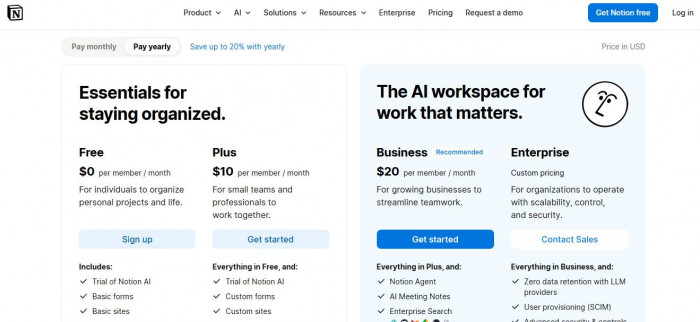
Notion AI works best in structured environments. It helps summarize content, generate notes, and organize information inside a system. This reduces the time spent rewriting, organizing, and searching.
Pricing typically adds around $8 to $10 per month on top of standard Notion plans.
Mem takes a different approach. It focuses on capturing and retrieving information quickly. Instead of forcing structure, it organizes content automatically and makes it easier to find later.
Pricing generally ranges from $8 to $15 per month.
The limitation in both cases is consistency. These tools only reduce effort if you use them as your primary system. Otherwise, they become another place where information lives.
Quick Comparison
| Tool | Starting Price | Saves Time In | Limitation |
| ChatGPT | Free / ~$20 | Writing and thinking | Needs clear input |
| Claude | Free / ~$17 | Structured reasoning | Limited ecosystem |
| Motion | ~$19/month | Task scheduling | Requires full adoption |
| Sunsama | ~$16–20/month | Daily planning | Less automation |
| Zapier | ~$20/month | Workflow automation | Expensive at scale |
| Make | ~$10–20/month | Advanced automation | Setup complexity |
| Notion AI | ~$8–10/month add-on | Information management | Needs structure |
| Mem | ~$8–15/month | Note retrieval | Depends on usage |
Where Most People Go Wrong
The common mistake is stacking tools instead of simplifying workflows.
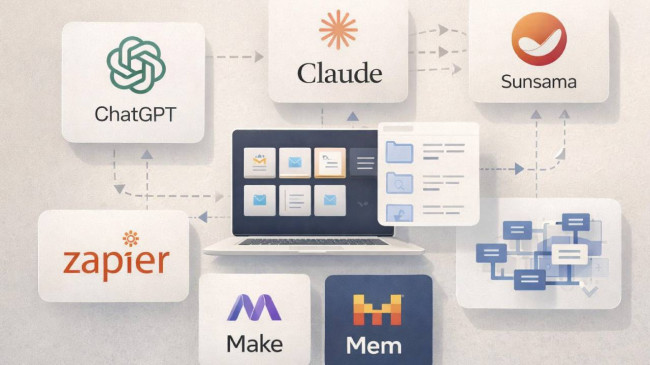
Using ChatGPT, Notion, Zapier, and multiple task managers at once does not increase productivity by default. It often creates fragmentation.
The goal is not to use more tools. It is to use fewer tools that remove the most friction.
This requires identifying the biggest bottleneck in your workflow and solving that first.
What Actually Works In The End
- Combining ChatGPT or Claude with automation tools like Zapier creates the biggest time savings, since it removes both the effort of thinking from scratch and the need to repeat routine tasks manually
- Motion becomes the most effective option when decision fatigue is the real problem, as it removes the need to constantly choose what to work on and replaces it with a clear, auto-generated schedule
- Sunsama works better for structured daily workflows, offering a controlled system that reduces overwhelm without forcing heavy automation or complexity
- Zapier or Make deliver the highest long-term impact when repetitive work is the main bottleneck, with Zapier being easier to start with and Make offering more flexibility for complex workflows
- Notion AI is more effective for managing large amounts of structured information, while Mem works better for fast capture and quick retrieval without needing to organize everything manually
- The most effective setup is not using multiple tools at once, but choosing one or two that directly remove the biggest source of friction in your daily workflow
The difference between real productivity and the illusion of it comes down to one thing. Tools that actually improve output remove steps entirely. They reduce thinking, eliminate repetition, and simplify decisions. Everything else simply reorganizes the same work. Once tools are evaluated based on what they remove instead of what they offer, the right choices become much easier to identify.








Comments