
Search has changed and so has the way content earns visibility. Today, brands need more than rankings to be found: they need to understand how AI systems see and cite their content.
Platforms like Wellows help marketing and content teams track where their brand is mentioned, referenced, or overlooked across leading AI models like ChatGPT, Gemini, Perplexity, and Google AI Overviews — and turn those insights into action.
To succeed in this new landscape, writing teams must learn how to optimize for Google AI Overviews and structure content for extractability and authority.
Why AI Overviews Change the Game for Content Teams
Traditional SEO rewarded:
● Keyword targeting
● Backlinks
● On-page optimization
AI Overviews reward:
● Clear answers
● Contextual depth
● Entity clarity
● Structured information
● Demonstrated expertise

AI systems don’t just rank pages, they synthesize them. That means your content must be easy to quote, summarize, and validate.
For content managers, this shifts the question from:
“Can we rank for this keyword?”
to
“Can our content become the most extractable, trusted source on this topic?”
Step 1: Rethink Content Briefs for AI Extractability
AI Overviews prioritize clarity and directness. Your content briefs must now instruct writers to:
1. Answer Early
Include a concise answer immediately after the H1 or H2.
Think: 2–4 sentences that directly address the query.
Bad:
“In today’s digital landscape…”
Better:
“AI Overviews are AI-generated summaries that appear at the top of Google’s search results, combining insights from multiple authoritative sources.”
2. Define Entities Clearly
AI relies heavily on entities (people, tools, concepts, brands). Writers should:
● Clearly define terms
● Use consistent naming
● Avoid vague references
For example:
● Instead of “this tool,” use the product name.
● Instead of “the algorithm,” specify which one.
3. Structure for Scannability
Encourage:
● Short paragraphs
● Bullet points
● Tables
● Step-by-step sections
● FAQ blocks
AI systems extract structured content more easily than long narrative blocks.
Step 2: Build Topic Depth, Not Just Keyword Coverage
AI Overviews favor pages that demonstrate topical authority.
Instead of writing isolated blog posts, content teams should:
Create Topic Clusters
● Pillar page (broad topic)
● Supporting articles (subtopics)
● Interlink strategically
For example:
● Pillar: AI Search Optimization
● Supporting:
○ What Are AI Overviews?
○ How AI Overviews Impact SEO
○ Structured Content for AI Systems
○ AI Overview Optimization Strategies
This creates contextual reinforcement, signaling authority.
Step 3: Optimize for Questions, Not Just Keywords
AI Overviews often trigger on question-based queries.
Content teams should incorporate:
● What is…
● How does…
● Why does…
● Best way to…
● Examples of…
Add Dedicated FAQ Sections
Use clear formatting:
What is AI Overview optimization?
AI Overview optimization is the process of structuring content so that Google’s AI-generated summaries can easily extract, verify, and cite it.
FAQs:
● Increase extractable passages
● Improve semantic coverage
● Align with AI retrieval patterns
This is no longer optional — it’s strategic.
Step 4: Elevate Editorial Standards (E-E-A-T Still Matters)
AI systems still rely on authority signals.
Writing managers should ensure:
Author Transparency
● Clear author bios
● Relevant expertise
● Real-world experience
Evidence & Sources
● Cite data
● Reference reputable studies
● Avoid generic claims
Original Insights
AI systems prioritize content that adds perspective — not just reworded summaries.
Encourage writers to include:
● Examples
● Case observations
● Strategic commentary
● Frameworks
AI prefers substance over fluff.
Step 5: Write for Retrieval Models, Not Just Humans
This doesn’t mean robotic writing. It means clarity.
AI systems look for:
● Clear sentence construction
● Logical progression
● Topic consistency
● Reduced ambiguity
Avoid:
● Overly metaphorical language
● Rambling introductions
● Keyword stuffing
● Redundant phrasing
Prefer:
● Declarative statements
● Structured subheadings
● Context reinforcement
Example:
Weak:
“Content is king in many ways.”
Strong:
“Content optimized for AI Overviews must provide structured answers, clear entity definitions, and contextual depth.”
Precision improves extractability.
Step 6: Update Existing Content for AI Readiness
You don’t always need new articles. Often, you need a better structure.
Content managers can run audits asking:
● Does this page immediately answer the primary query?
● Are subtopics clearly separated with H2/H3 headings?
● Are definitions concise?
● Is the content easy to summarize?
● Does it demonstrate expertise?
Adding:
● Summary blocks
● FAQs
● Definitions
● Tables
● Bullet-point frameworks
can significantly improve AI Overview eligibility.
Step 7: Measure Beyond Rankings
Traditional metrics like:
● Position
● CTR
● Traffic
are still important.
But AI visibility requires new tracking thinking:
● Is your content being cited in AI Overviews?
● Are branded mentions increasing?
● Are impressions growing for question queries?
● Are zero-click impressions rising?
Content teams must align SEO dashboards with AI-era signals — not just rankings.
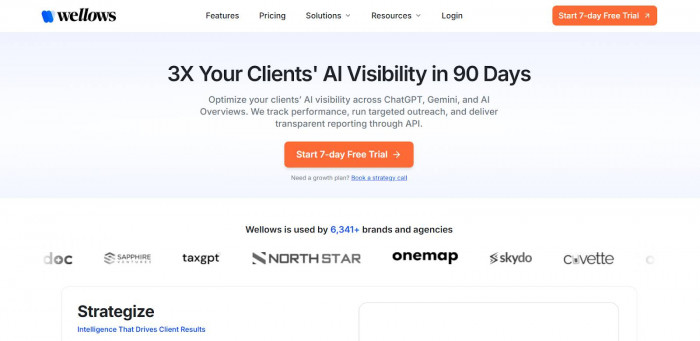
This is where AI visibility platforms like Wellows become critical — helping content teams understand where their brand is being mentioned across AI systems like Google AI Overviews, ChatGPT, and Gemini, and where optimization gaps exist.
Step 8: Align Writers, SEOs, and Content Ops
AI Overviews reward cohesion.
Your workflow should connect:
● SEO research
● Content briefs
● Writer guidelines
● Editor QA
● Internal linking
● Technical formatting
Create an internal checklist for AI-readiness:
AI Overview Content Checklist
● Direct answer in first 100 words
● Clear entity definitions
● Structured headings
● FAQ section included
● Internal contextual links
● Evidence or examples added
● No filler introductions
Make this part of your editorial SOP.
The Mindset Shift Writing Teams Must Make
The biggest change isn’t technical — it’s philosophical.
Old mindset:
“How do we rank higher?”
New mindset:
“How do we become the clearest, most trustworthy answer?”
AI Overviews are designed to synthesize the best available information. Writing teams that focus on clarity, structure, and authority will be rewarded.
This isn’t the end of SEO.
It’s the evolution of content strategy.
Final Thoughts
This isn’t the end of SEO, it’s the evolution of content strategy.
Winning in AI Overviews requires structure, depth, and authority. And as AI systems increasingly shape discovery, platforms like Wellows are emerging to help content teams measure and strengthen their presence across AI search environments.
The future belongs to brands that don’t just rank, they get referenced.





Comments