
A car accident is sudden. The legal consequences are slow.
Metal bends instantly. Liability unfolds over months. What feels like a straightforward crash at the roadside often transforms into a layered financial and evidentiary dispute once insurance carriers begin their analysis.
The difference between a minor claim and a substantial recovery rarely depends on emotion. It depends on structure, how responsibility is established, how injuries are documented, and how losses are calculated.
Understanding that structure changes everything.
How Fault Is Examined Beyond the Scene
At first glance, many collisions appear obvious. A rear-end impact. A missed traffic signal. A failed lane change.
But civil liability is not decided by surface impressions. It is determined through reconstruction of conduct.
Investigators and insurers examine:
● Speed calculations
● Road design
● Visibility conditions
● Signal timing
● Vehicle positioning
● Driver reaction patterns
Even minor deviations from expected driving behavior can introduce comparative fault arguments. What seems clear in the moment often becomes contested under scrutiny.
Liability is not assumed. It is constructed.
The Role of Medical Timing in Claim Strength
One of the earliest pressure points in any injury claim is medical response.
Insurance companies track:
● Time elapsed before first treatment
● Consistency in symptom reporting
● Referral patterns
● Diagnostic imaging support
● Duration of therapy
If care begins late or stops abruptly, insurers may question whether the injury was caused by the crash at all.
Continuity tells a story. Interruptions weaken it.
In serious cases, the medical record becomes more influential than eyewitness testimony.
Financial Impact: Looking Beyond Immediate Bills
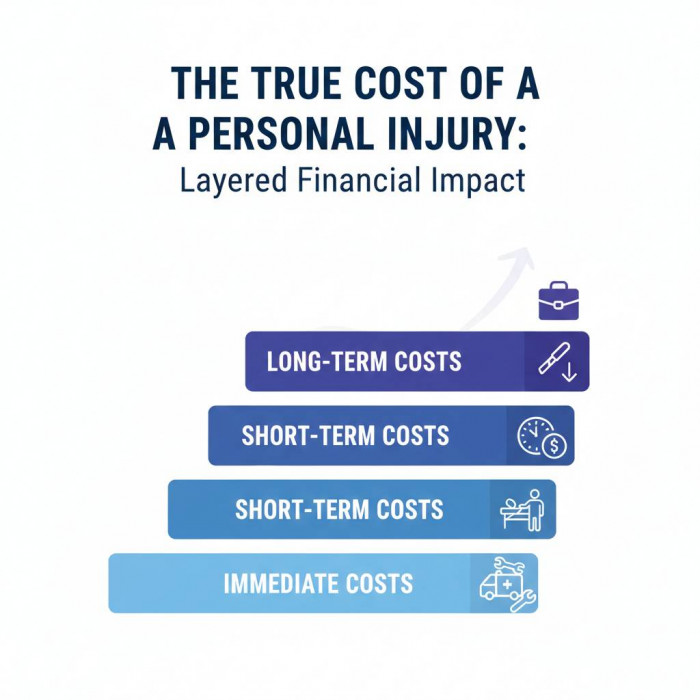
Vehicle repairs are visible and quantifiable. Physical recovery is less predictable.
A claim must often account for:
● Ongoing rehabilitation
● Missed professional opportunities
● Reduced physical capacity
● Long-term earning limitations
Future damages are frequently the most disputed element because they require projections. Medical experts may be asked to estimate permanency. Economists may calculate wage differentials across years.
Insurance carriers tend to minimize future risk. Claimants must substantiate it.
Insurance Valuation Methods: A Structured Process
Behind every settlement offer sits an internal evaluation framework.
Adjusters review:
● Diagnostic codes
● Injury classifications
● Duration of disability
● Comparative fault percentage
● Historical verdict data
These frameworks are not arbitrary, but they are conservative. Early offers often reflect the lowest defensible range based on current documentation.
Accepting prematurely can close the door on compensation for complications that emerge later.
Patience, supported by evidence, alters negotiating power.
When Responsibility Is Shared
Modern negligence law allows fault to be divided. If an injured driver contributed to the crash, recovery may decrease proportionally.
Common defense arguments include:
● Distracted driving
● Failure to maintain proper lookout
● Speed variation
● Improper signaling
Even a modest allocation of fault can significantly affect final compensation figures.
Contesting these allocations requires deliberate legal positioning, especially in cases involving substantial medical exposure.
Escalation to Formal Proceedings
Most injury claims are resolved through structured negotiation, but some disputes cannot be settled through correspondence alone. When responsibility is denied outright, or when insurers challenge the severity or permanence of injuries, formal litigation becomes a procedural necessity rather than a strategic choice.
Filing a lawsuit changes the environment immediately. Communication shifts from informal adjuster discussions to court-supervised processes. Discovery rules require both sides to exchange documents, produce medical records, disclose expert opinions, and submit to sworn testimony. Depositions allow attorneys to question parties under oath. Independent medical examinations may be requested to evaluate the legitimacy or extent of claimed injuries.
At this point, the claim transitions from valuation debate to evidentiary examination. The strength of documentation, consistency of medical treatment, and credibility of testimony become central factors.
In high-exposure cases involving substantial medical costs or long-term impairment, many injured individuals eventually consult an experienced Orlando Car Accident Attorney to assess whether continued negotiation remains viable or whether structured litigation provides stronger leverage. That assessment is rarely driven by frustration. It is driven by risk analysis, projected recovery value, and the likelihood that a jury could view the evidence differently than an insurance adjuster.
Formal proceedings are not about conflict for its own sake. They are about recalibrating bargaining power when voluntary resolution stalls.
The Influence of Technology in Modern Collision Cases
The way vehicle accidents are evaluated has changed significantly over the past decade. Modern cars and roadways generate data that did not exist in earlier eras of litigation.
Event data recorders, often referred to as “black boxes”, can capture speed, throttle position, brake application, and seatbelt usage seconds before impact. Traffic intersection cameras provide time-stamped footage. Dash cameras record angles and movement patterns. In certain cases, smartphone metadata can indicate whether a device was active at the time of collision.
This digital footprint often resolves disputes that would otherwise rely on conflicting witness accounts. Instead of debating perception, investigators analyze timestamps and measurable inputs.
Technology also narrows room for narrative distortion. When braking patterns and speed readings are documented electronically, liability arguments must adjust accordingly.
As a result, modern injury claims increasingly depend not only on testimony but also on technical interpretation. Digital evidence has become a decisive factor in contested cases, particularly when shared fault is alleged.
Psychological and Lifestyle Consequences
Physical trauma is typically visible in imaging scans and surgical reports. Emotional and lifestyle disruption is less apparent, yet frequently just as significant.
After a serious crash, individuals may experience heightened anxiety while driving, sleep disturbances, irritability, or avoidance behaviors. Activities that once felt routine, commuting, exercising, traveling, may become sources of stress or discomfort. Chronic pain can alter posture, concentration, and mood. Over time, these changes influence relationships, employment performance, and overall quality of life.
Courts and insurers recognize non-economic harm, but they require substantiation. Psychological evaluations, consistent therapy records, and physician observations help transform subjective experiences into documented impacts.
Without structured medical support, these consequences are often minimized during settlement discussions. With appropriate documentation, however, lifestyle impairment becomes a measurable component of damages.
A vehicle collision can disrupt far more than physical health. It can alter daily rhythm, confidence, and long-term wellbeing. Legal evaluation must account for that broader human effect when compensation is assessed.
The Long View: Why Early Decisions Matter
The aftermath of a crash is disorienting. Yet the earliest choices, medical evaluation, documentation, communication, quietly shape the eventual outcome.
A vehicle collision may last seconds, but the financial implications can extend for years.
Approaching the legal process methodically transforms uncertainty into structured strategy. When claims are built carefully, compensation reflects reality rather than assumption.










Comments