
How Structured Documentation Strengthens Accident and Injury Claims
Personal injury disputes are rarely resolved by emotion alone. While accidents are often sudden and stressful, their legal outcomes depend on structure, clarity, and documentation.
Whether the claim involves a motor vehicle collision, a workplace injury, or a premises liability dispute, organized evidence often determines whether accountability is clearly established or diluted through uncertainty.
In today’s environment, strong cases are built the way strong reports are written, with coherence, alignment, and disciplined presentation.
Why Evidence Structure Matters More Than Ever
In personal injury disputes, responsibility must be proven, not assumed.
Medical records must align with the mechanism of injury. Accident reports must match physical damage. Witness statements should reinforce, not contradict, each other. Financial losses must be supported by measurable documentation.
When evidence is scattered, incomplete, or inconsistent, insurers gain leverage. Small gaps in treatment history may raise doubts. Conflicting descriptions of events may introduce comparative fault arguments. Even minor inconsistencies can influence settlement negotiations.
Organized evidence reduces ambiguity. It presents a clear sequence of cause and effect.
Building a Coherent Timeline After an Accident
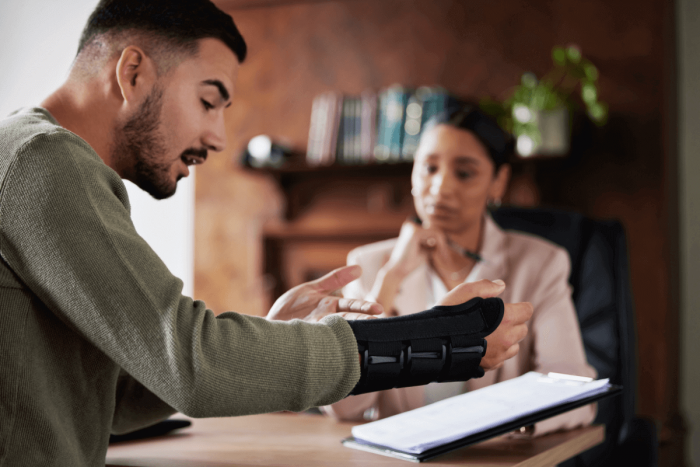
A strong claim often begins with a clear timeline.
The sequence typically includes:
● Date and time of the accident
● Immediate response and medical attention
● Ongoing treatment documentation
● Repair or inspection records
● Insurance communications
When these elements are properly documented and preserved, they create continuity. When they are delayed or inconsistently recorded, the opposing side may question causation or severity.
Timing and organization work together. A well-documented timeline strengthens credibility before negotiations even begin.
Common Weaknesses That Undermine Injury Claims
Many personal injury disputes weaken not because liability is unclear, but because documentation lacks structure.
Common issues include:
● Delayed medical treatment without explanation
● Missing accident photographs
● Inconsistent symptom reporting
● Informal communication with insurers
● Failure to preserve relevant records
These weaknesses often emerge during insurance review, where adjusters assess clarity and consistency before determining settlement positions.
Structured preparation reduces these vulnerabilities.
Insurance Evaluation and Documentation Scrutiny
Insurance carriers rely on systematic review processes when evaluating claims. Adjusters assess not only fault but also record consistency and financial justification.
They examine whether medical treatment aligns with the reported injury. They analyze whether damages appear proportional to the accident description. They evaluate communication patterns and liability positioning.
When documentation is organized and internally consistent, negotiation discussions tend to focus on resolution. When evidence appears fragmented, disputes escalate.
Understanding this evaluation framework helps claimants and legal teams prepare proactively rather than react defensively.
When Professional Legal Guidance Becomes Critical
As injury disputes grow more complex, particularly in serious vehicle collisions, legal guidance often becomes essential.
Experienced firms such as San Luis Obispo Car Accident Lawyers approach cases with a structured documentation strategy. This includes preserving accident records early, aligning medical evidence with impact analysis, and anticipating comparative fault arguments before negotiations intensify.
Their role extends beyond filing claims. It involves organizing proof so that liability remains clear and measurable rather than diluted by incomplete documentation.
In cases where damages are substantial or fault is contested, disciplined evidence organization can significantly influence how responsibility is evaluated.
Comparative Fault and the Impact of Precision
In many jurisdictions, compensation depends on fault allocation. Even a modest percentage shift can meaningfully affect recovery.
Because of this, structured presentation is critical. Accident reports, witness accounts, and supporting records must be reviewed carefully to prevent unnecessary fault positioning.
Precision in documentation and argument often determines whether liability remains strong or becomes partially reduced through disputed interpretation.
Lessons in Structure: What Legal Claims Share with Professional Writing
At its core, organized evidence functions much like well-managed content.
In professional writing, clarity depends on structure. Ideas must flow logically. Claims must be supported by sources. Timelines must make sense. Disorganization weakens credibility.
The same principle applies in legal disputes.
Personal injury claims require:
● Clear sequencing
● Consistent narrative alignment
● Supporting documentation
● Logical progression from event to outcome
When structure is strong, credibility increases. When structure is weak, doubt expands.
For professionals managing complex information, whether in legal matters or content workflows, the lesson is consistent: organization is not cosmetic. It is strategic.
What Personal Injury Claims Can Teach Content Managers
There is a clear parallel between strong legal claims and strong content strategy.
Both require:
● Clear structure
● Deadline discipline
● Evidence alignment
● Version control
● Consistency across documents
In content management, outlines prevent drift. In legal claims, timelines prevent contradiction.
Writers are taught to support every argument with credible sources. Legal professionals must support every allegation with documented proof.
In both fields, credibility grows from coherence.
Disorganized information weakens trust, whether the audience is a reader or an insurance adjuster.
Workflow Models: From CMS to Case Management
Content teams operate through structured workflows:
Outline → Draft → Review → Edit → Publish
Personal injury claims follow a comparable model:
Preserve → Document → Analyze → Present
● Preserve: Secure accident evidence and medical records early.
● Document: Establish clear, consistent chronology.
● Analyze: Evaluate liability exposure and documentation gaps.
● Present: Structure proof strategically for negotiation or litigation.
Both workflows rely on stage-based discipline. Skipping steps weakens outcomes.
In writing, skipping editing harms clarity. In legal claims, skipping preservation harms accountability.
Structured workflow drives predictable results.
Analytical Tools and Workflow Support in Case Preparation
As documentation volumes increase, structured tools increasingly assist preparation.
AI-assisted platforms can organize large files, flag inconsistencies across records, and help ensure timeline continuity. Reconstruction software may model accident sequences for clarity. Predictive analytics tools may provide settlement reference ranges based on historical patterns.
These systems do not replace legal judgment. They enhance preparation by improving structure and reducing overlooked gaps.
The goal remains the same: build claims on measurable consistency rather than assumption.
Structure Builds Stronger Outcomes
Personal injury disputes are ultimately resolved through proof, not emotion. Organized evidence strengthens accountability. Clear timelines reduce ambiguity. Structured documentation improves negotiation leverage.
Whether managing a legal claim or overseeing complex information workflows, disciplined organization remains the foundation of credible outcomes.
In accident disputes, structure is not optional, it is strategic.









Comments